Author

Jensen Beeler

Browsing

The original factory streetfighter, the Triumph Speed Triple latched motorcycling’s punk movement in 1994, and never looked back.

Now for the 2018 model year, the British brand is updating its venerable streetfighter – dragging the Speed Triple into the digital age with a bevy of electronic updates. and other technical improvements.

With more power (148 hp), more torque (86 lbs•ft), and less weight (467 lbs wet), it is evolution, not revolution for the 2018 Triumph Speed Triple, which comes in two varieties, the S model and the RS model.

Triumph claims over 100 changes have occurred inside the Speed Triple’s 1050cc three-cylinder engine cases, most of them to help the triple rev-up quicker and to achieve its higher redline of 10,500 rpm (+1,000 rpm higher than the previous model).

Riding the 2018 Triumph Speed Triple RS in Almería, Spain, Asphalt & Rubber got to see first-hand how these updates build upon Triumph’s street-hooligan reputation, and whether the Triumph Speed Triple RS is a worthy alternative to the bevy of robust machines already in this category.

The result? The 2018 Triumph Speed Triple RS is a smart update to the British brand’s streetfighter, and though it falls short of the high-water mark in the space, it offers some strong bang-for-the-buck hooning, which makes it very appealing. Let me explain.

We were supposed to wait another week until we heard pricing for the new Triumph Speed Triple, but the British brand spilled the beans early to the assembled press, at the bike’s international press launch in Almería, Spain.

Revamped for this model year, the new Triumph Speed Triple is really an evolution of the previous model, but adds some important upgrades to the original production streetfighter – namely a robust electronics suite and a more powerful 1050cc engine.

As such, we have prices for the 2018 Triumph Speed Triple S and 2018 Triumph Speed Triple RS for the US market, and Hinckley has done a good job of keeping this venerable streetfighter competitive against the field, both in terms of features and costs.

I just saw that it is snowing back home in Portland, so a very sunny hello from Spain, where we have flown to ride the new Triumph Speed Triple RS.

An update over the previous model, Triumph is boasting over 100 new pieces for the engine alone (along with a power bump to 148hp), but one quick look at this venerable streetfighter and it is obvious to see that it is evolution over revolution here for the Speed Triple.

That is not to say that Triumph hasn’t brought some meaningful updates to its awkwardly styled – yet beloved – machine, which should help the Speed Triple RS stack up very nicely against the very competitive models in the streetfighter segment.

The inclusion of IMU-powered traction control and brakes (RS model only) is the first major change made to aid that effort. The electronics suite is similarly robust with a ride-by-wire throttle, different power modes, and a 5″ TFT dash – keep things felling modern.

Helping earn the “RS” badge is OEM-spec Öhlins suspension, as well as an Arrow exhaust. Carbon fiber bodywork also comes on the RS model.

To test the new Speed Triple RS, Triumph has a two-fer for us today, riding on the streets of Spain, and then heading to the Circuito de Almería.

I’ve heard good things about Almería, so the day’s riding should be a perfect example of what one does with a dank-whoolie monster, such as the Speed Triple RS.

I was a big fan of the outgoing model, so I have high hopes for the 2018 edition, especially now that it stacks up better against the competition on the spec-sheet. The streetfighter segment is incredibly fierce though, and Triumph has some stiff competition, which means grading will be tough and merciless.

Per our new review format, we will be giving you a live assessment of the new Triumph Speed Triple RS right here in this article (down in the comments section), and there we will try to answer any questions you might have.

So, here is your chance to learn what it’s like to ride the Triumph Speed Triple RS, before even my own proper reviews are posted. As always, if I don’t know an answer, I will try to get a response from the Triumph personnel. So, pepper away.

You can follow our thoughts on the bike live via FacebookTwitter, and Instagram, and you can see what our colleagues are posting on social media by looking for the hashtags: #Triumph & #SpeedTripleRS

The 2018 season will be the last year that Honda powers the Moto2 World Championship, with the intermediate grand prix series set to use Triumph’s 765cc three-cylinder engine from 2019 onward.

This should be cause for quite a shakeup in Moto2, with the British brand making a stronger effort in recent time to be part of the racing scene. That effort will be ancillary though, because the real magic in the Moto2 class comes from the various chassis-builders.

As such today, we get to see the first completed Moto2 machine for 2019, and it shouldn’t surprise us to see that it is a Kalex.

Cornering ABS, it’s the hot new thing on motorcycles rights now. So important is this braking technology, one industry CEO explained it to me in the following terms: in terms of safety, it does to the front wheel what traction control has done for the rear wheel.

I won’t make the bold statement that IMU-powered (that’s inertial measurement units for the uninitiated) braking systems make it impossible to tuck the front wheel of a motorcycle, but they do make it exceedingly difficult to do so, especially by use of the brakes.

Not surprisingly then, we see a number of motorcycle brands offering this technology now, usually on their more premium models. KTM was the first do so, getting an exclusive from Bosch, one of the leaders in this space.

Since then though, cornering ABS has come to virtually every brand (strangely, none of the American motorcycle brands offer a motorcycle with cornering ABS right now), and we see several players offering systems to these OEMs, with Bosch and Continental leading the pack.

We had an inclination that the ongoing Brembo master cylinder recall would hit the Husqvarna FS450 supermoto in the USA, after seeing a note for it in the European market, and today we get confirmation that this is the case.

For those not in the loop, this news centers around a defect with the Brembo PR15 and PR16 line of master cylinders, which can see their polymer pistons fracture during severe use. Should the piston fracture, the master cylinder may stop working, thus causing the front brakes to fail. 

Because of this, a bevy of motorcycle brands have had to recall their high-performance motorcycle offerings with the National Highway Traffic Safety Administration.

So far, we have seen recalls from Aprilia, Ducati, KTM, MV Agusta, and now Husqvarna.

Attention owners of the Kawasaki Ninja ZX-10R and Kawasaki Ninja ZX-10RR motorcycles from the 2016 thru 2018 model yeas, as news has come from the National Highway Traffic Safety Administration that roughly 4,000 of these machines might have issues with their gearboxes.

According to the recall, a high impact force can cause the transmission gears to break during shifting – specifically the 2nd, 3rd, and 4th gears in the gearbox.

First discovered in the Thai market, Kawasaki found upon further investigation that the strength of these gears was not sufficient, and could break under excessive force. As such, two warranty claims in the US have already been made for this issue.

The motorcycle media landscape is rapidly changing, and those changes have hit another publication: Motorcycle.com.

The original gangster of online motorcycle news, Motorcycle.com has seen its two raking newsmakers make their exits from the publication, Sean Alexander and Kevin Duke.

For those who don’t know, Duke was the Editor-and-Chief of MO since 2007, before losing the position in late-2017, while Alexander served as the Director of Powersports Editorial since November 2013, until about one week ago.

Both men now find themselves no longer part of the company, as Vertical Scope – Motorcycle.com‘s owner – re-organizes the brand.

This news has been a bit of a shock to the moto-journalist ranks, though perhaps not ultimately that surprising.

Regular Asphalt & Rubber readers should recognize the name TVS as the brand behind BMW’s small-displacement lineup of motorcycles, with the Indian firm also releasing its 300cc-class sport bike, the TVS Apache RR 310.

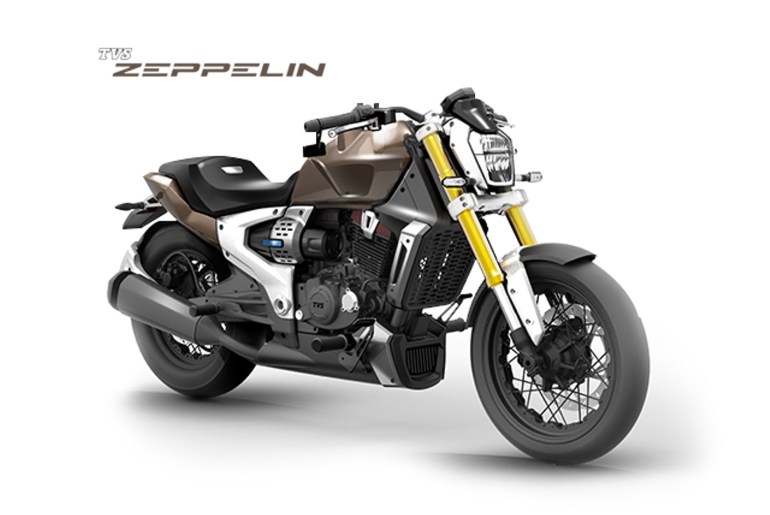
Here is another reasons to take notice of the TVS Motor Company though, as it just debuted a hybrid gas-electric cruiser concept, which not only is interesting from a technical perspective, but it looks pretty good too.

For the Western world, the TVS Zeppelin isn’t going to blow the doors off the market, at least not with the quoted specs, but TVS does have some clever ideas for the model.

In Episode 2 of the MOTR Podcast, I sit down with motorcycle journalists Adam Waheed (freelance), Lemmy (RevZilla), and Abhi Eswarappa (Bike-urious) to discuss what it’s like to ride Big Red’s flagship motorcycle, the Honda Gold Wing.

Recoded at the international media launch for the Gold Wing – in Austin, Texas – the four of us gathered around the microphones to discuss the sixth generation of this iconic touring machine.

With no shortage of opinions, the show is an interesting discussion about our first impressions of the Gold Wing and Gold Wing Tour models. We think you will find it quite interesting.

To get our full opinions on the new Honda Gold Wing you can read my review here on Asphalt & Rubber, as well as Adam’s reviews on Rider’s Domain, Lemmy’s review on RevZilla’s Common Tread, and Abhi’s review on Bike-urious.

You can find the latest episodes of the MOTR Podcast on iTunes, Google PlaySoundCloud, or via your RSS feed, and be sure to follow us on Facebook and Twitter as well.

If you’re not already, you should also listen to our sister podcasts, the Two Enthusiasts Podcast and The Paddock Pass Podcast.

Just the other day, I was lamenting to a Ducati person about how the Desert Sled should have been the first model from the motorcycle makers Scrambler sub-brand…since, you know, it goes off-road quite well.

Built for the hard hits and jumps that come with taking a production street bike scrambling through the woods, the Desert Sled pretty much lives up to its name. But, if you really want to do the business, some changes need to be made.

This is where Alex Earle comes in the picture, with his Ducati Desert Sled “ADV Alaska” Prototype. A designer for Audi by day, Earle is known better in motorcycling circles for his street-tracker inspired custom Ducatis. You’ve probably seen them before.