In the final part of our look back at 2013, we review the performance of the factories. How did Honda, Yamaha and Ducati stack up last season? What were their strong points, and how did they go about tackling their weaknesses? Above all, what does this mean for 2014? Here’s our rating of MotoGP’s manufacturers.

Honda – Championship Standing: 1st – Rating: 10/10

It seemed as if every technical rule change and tire decision swung against Honda in 2012. First, they found themselves outfoxed over the minimum weight by Ducati, after the MSMA first told the Grand Prix Commission that they had unanimously rejected a proposal to raise it from 153kg to 160kg.

It turned out that only Honda and Yamaha had rejected it, with Ducati voting in favor, which meant the rule should have been adopted and not rejected. As a concession to the manufacturers, the weight was raised in two stages, to 157kg in 2012, and 160kg in 2013.

Then, after being tested at Jerez, the riders voted to adopt the new, softer construction front tires, despite complaints from the Repsol Honda riders.

Honda struggled for much of 2012, first working out where to place an extra 4kg (a problem the other factories did not have, as they had struggled to get anywhere near the previous minimum of 153kg), and then running through chassis and suspension options in search of the braking stability they had lost with the introduction of the softer front tire.

After the test at the Mugello round, they had most of the problems solved, and Casey Stoner and Dani Pedrosa went on to win eight of the last nine rounds.

Come the 2013 season, and Honda was well-prepared. The factory already had its braking stability issues under control, and the only point left was the extra 3kg it had to carry. Having had all of 2012 to prepare for the extra weight, Honda arrived at the start of the season with few issues.

Reviews

There is an easy and quick way to lighten your bike, lower its center of gravity, and marginally improve its dynamic performance for $200 or less: the starter battery. Lead-acid, absorbed gas mat, and gel batteries have been around for years now, and while they provide cheap, reliable, and robust performance, they are obtrusively heavy and large. Luckily, the market for starter batteries has been moving in the direction of new battery technologies with the latest iterations utilizing lithium iron phosphate chemistries. We had two companies send us their most popular models for testing and we came away impressed with the weight savings, performance, and overall value that they had to offer.

WSBK

I know that I have seen more than a few loyal Asphalt & Rubber readers lament the lack of an online video feed for World Superbike races, and that they hoped that the takeover of the premier production motorcycle racing class by Dorna would add this feature, which is already available with the MotoGP Championship. Well today, my good friends, that day has come. Dorna has revamped WorldSBK.com, and with those changes comes the WSBK VideoPass feature. From the limited description given by World Superbike, the WSBK VideoPass sounds pretty much exactly like its MotoGP counterpart, with video streams from the practice, qualifying, and race sessions being made available, along with exclusive behind the scenes footage and interviews.

Products

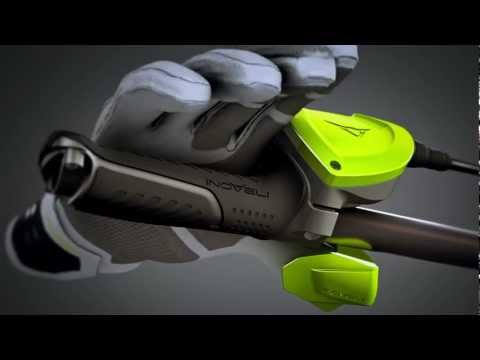
There isn’t anything necessarily wrong with the twist-grip throttle design found on motorcycles, after all millions of motorcyclists each year manage to use this simple design with great efficacy. This, however, does not mean that the current iteration of throttle design is perfect for its application; after all each time you twist the throttle, you are compromising the angle of your wrist in relation to the handlebar. Maybe it is time for another way? That is the thought process behind the Inoveli throttle concept. Using a rider’s thumb, instead of their wrist, the Inoveli throttle allows one to keep a constant grip on the handlebar throughout the entire throttle range of motion, which translates into less rider fatigue and more rider safety.

Bikes

If you’re in the market for a Ducati 899 Panigale, and have the misfortune of living in Japan, the above is what you will be forced to buy. You see the Ducati 899 Panigale, like the Ducati 1199 Panigale and MV Agusta F3, is too loud in its stock form for the Japanese market. Compounding the issue, the Island Nation is too small of a market for Ducati to revamp its design to meet homologation in its stock form, so an obvious quick-fix has been implemented instead. It’s a bit of an eyesore on any model; but on the Panigale, the long carbon fiber pipe detracts from the hard work Ducati designers and engineers put into the attractive under-slung unit on the middleweight sport bike. Also of note is the revised big black plastic clutch cover, for added sound dampening.

News

The “BMW rider” is almost its own class of rider in the United States. You know the type: usually white, male, greying or white hair, maybe a pair of glasses and a sweet $1,000 Schuberth flip-up helmet to top it off. Ah, and don’t forget the well-worn-in Roadcrafter in blue with fluorescent yellow accents. As for the bike, it has got to the venerable GS. Of course we are speaking generalities here, but as it turns out, that stereotypical demographic is also BMW’s most lucrative. The latest sales statistics from BMW Motorrad USA show the BMW R1200GS to be the company’s best selling motorbike in the states with over 2,000 sold. With BMW Motorrad USA selling 14,100 motorcycles in total for 2013), the R1200GS has thus unseated the S1000RR as the best selling BMW motorcycle in the USA.