Tag

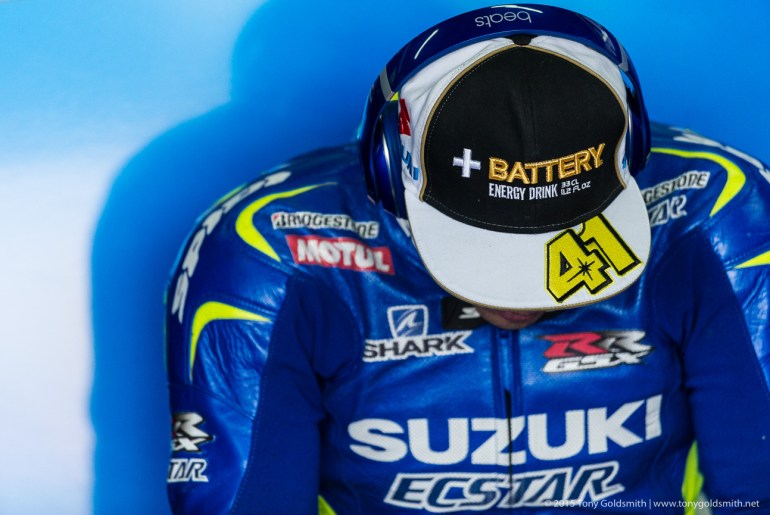
Aleix Espargaro

Browsing

What did we learn from the first proper MotoGP test of the new era of Michelin tires and spec-electronics? More than we hoped, yet less than we think. A quick run down on the state of play after Sepang, with more to come over the following days.

Michelin

The riders approached the Sepang test with some trepidation, fearing that Michelin had not fixed its wayward front that caused so many crashes at Valencia and Jerez.

Their fears were unfounded, the new front tires which Michelin brought – a total of five different types, of varying construction and compound – were all a massive step forward.

They were not as stable as the Bridgestones they replaced, but they had gained a lot of predictability and feedback. There were very few crashes that the riders said they had not seen coming.

That does not mean that all of the problems have been solved. A couple of people went down at Turn 5 on Tuesday, in crashes they described as strange. Casey Stoner (more on him later) had a typically concise and thoughtful analysis.

“There’s a little point after probably 45°, that [the tire profile] goes down just a little bit more, that it doesn’t seem to match with the rear with some of the profiles that we’ve tested,” Stoner explained.

“That gives everybody a little bit a nervous feeling, and essentially why people are struggling into Turn 5, a big fast open corner, going in, when the bike goes light, it doesn’t like that feeling. It makes the bike a little nervous, and I think that’s when the front wants to break away.”

If being the official supplier to a racing series is a double-edged sword, then being the sole supplier of equipment as essential as tires is doubly so.

Leaving aside the complexities of exactly what a four-edged sword would actually look like, being official tire supplier to MotoGP is a role that offers massive opportunities for raising the role of a brand, and having it associated with the most famous names in motorcycle racing.

It gets your brand name and logo in front of many tens of millions of race fans and motorcycle enthusiasts every weekend. It also sees your logo plastered all over just about every photo which appears in magazines and newspapers about MotoGP, as well as filling thousands of column inches on websites and in magazines.

If you had to pay for the same exposure – a concept known as equivalent advertising value – it would cost you many, many times the €25 million Bridgestone were rumored to have paid for the contract.

There is a downside, of course. It is extremely uncommon to hear riders heap praise upon your tires spontaneously. Bridgestone had to announce they were pulling out of the role as official supplier to receive the praise they deserved, riders immediately paying tribute to just how good their racing tires actually are.

What did we learn from the first day of testing at Sepang? Exactly what we expected to learn. Some riders have adapted quickly, others less quickly. The Michelins have made a big step forward, and the teams have started to understand the Michelin tires better.

The spec-electronics still need plenty of work, but are pretty usable in their current form (and well liked by the riders). Yamaha and Ducati have adapted well, Honda not very well at all, with the possible exception of Dani Pedrosa.

Above all, we learned that it is too early to be making any judgment calls, and that everyone still has a lot of work to do, and a lot of room for improvement. Today’s outcome is interesting, but not definitive.

In other words, if your favorite rider is near the top of the timesheets, you can feel optimistic that they will do well in 2016. If your favorite rider is nearer the bottom, you can console yourself with the fact that there is hope, and that testing will solve the worst of the issues.

These are the first images of the 2016 Suzuki GSX-RR MotoGP race bike from the Japanese manufacturer, the same machine that is currently lapping around the Sepang International Circuit this week for MotoGP’s first official test of 2016.

As you can see, not much has changed visually, though obviously a lot of the development has occurred beneath the fairings of the Suzuki GSX-RR. What we can see though are subtle changes to the twin-spar aluminum frame, which has now been completely filled in on both sides.

Also, there is a new and modified air ducts on the side fairings, likely for extra cooling – on the left side, it’s near the top of the bike, while on the right side, the lower ducts has been enlarged to expose the exhaust header more. The shape of the exhaust has also changed, making for a more sweeping design.

Of course, the big news for Suzuki’s MotoGP program is the addition of a seamless gearbox. For now, Suzuki’s seamlesss gearbox only does seamless upshifts, but it is likely before the season starts that seamless downshifting will be added to the design.

The gearbox was a top-request from riders Aleix Espargaro and Maverick Vinales, as was additional power. Early indications from Sepang seem to suggest that the Suzuki riders team will have a little bit more juice on tap for the 2016 season as well.

Super high-resolution shots are after the jump. We expect Suzuki to release more photos (hopefully of its other rider) in the coming weeks.

The hour of truth is at hand. On Monday morning, MotoGP fans will get their very first look at how the 2016 season is really going to look like. We got a glimpse at Valencia, but it was not a uniform picture.

Though the 2016 electronics and Michelin tires made their debut at the two-day test after the final race of 2015, there were still too many variables.

Everyone was on the Michelins, but some riders were on the spec-electronics, others were on the old proprietary software they had been using for the 2015 season, and the factory teams were using a mixture of both.

It was also the first time the teams had to focus solely on the new tires and electronics, without the pressure of an ongoing championship. Though for both Valentino Rossi and Jorge Lorenzo, the intensity of the season finale had left them drained, making it difficult to generate the necessary enthusiasm for testing.

There was a lot of work to do, for everyone concerned, and nobody did anything but scratch the surface.

Aleix Espargaro has fractured a vertebra in a training accident. The factory Suzuki rider was out training on an off-road bike, when he landed heavily from a jump, and felt pain in his back.

He was taken to hospital, where an MRI scan revealed a flexion fracture of the vertebra, which will force him to miss the Sepang test planned for next week.

The injury suffered by Espargaro should not see him out of action for long. The Spaniard was discharged from hospital on Friday morning, and will now have to rest for a two to three week period to allow him to recover.

Here is the one thing which everybody has wrong about Valencia: the 2015 MotoGP championship isn’t over by a very long chalk.

Whether Lorenzo qualifies on pole or the front row, whether Valentino Rossi starts from his qualifying position or the back of the grid, the championship won’t be done until the last rider gets the checkered flag. Everything is still to play for.

Why is the championship still wide open? Because Valencia is a fickle mistress, with a record of throwing up more than one surprise. Both Valentino Rossi and Jorge Lorenzo have won here, and both men have lost championships here.

Both men have dominated, and both men have crashed out. Races at Valencia are rarely straightforward, throwing up startling results more often than not. Throw in a spot of unpredictable weather, and anything can truly happen.

The cause of those surprises? Running a race at the beginning of November in Valencia means the weather is always a gamble.

Even when it is dry and sunny, as it is expected to be this weekend, the cold mornings and strong winds can cause tires to cool, turning Valencia’s right-hand corners – few and far between – into treacherous affairs. If it rains or is damp, the wind means a dry line forms quickly, turning tire choice into a gamble.

Has Valentino Rossi finally mastered qualifying? The Italian has struggled since the format changed, from the extended hour of qualifying which started out as free practice and ended up as an all-out time attack, to the frenetic fifteen-minute dash for pole.

His biggest problem, he always explained, was getting up to speed from the start: leaving pit lane and going flat out from the very first meters. He had spent a lifetime slowly sidling up to a blistering lap, rather than getting the hammer down as soon as the lights changed.

The switch from an analog to a binary format had been hard to swallow. Millions of older fans sympathized, as they faced the same struggle in their own lives.

Lorenzo, on the other hand, has thrived in the new format, having learned the skill while doing battle with Casey Stoner. The Australian’s greatest legacy was his ability to go as fast as possible the moment he left the pit lane.

I was once told by Cristian Gabarrini, Stoner’s crew chief, that when they looked at his sector times, they would see that he had set his fastest sector times on his out lap. To beat Stoner, Lorenzo had to learn to emulate him.

It’s only Friday, but already, one championship has been decided. Tito Rabat’s mission to outscore Johann Zarco was tough enough before he crashed at Almeria and broke his wrist, but trying to handle the immense braking stresses of the Japanese circuit with a freshly plated radius proved too much to ask.

Rabat’s attempt was brave, but ultimately doomed to failure. After riding in FP1, Rabat realized that it wasn’t so much the pain, but rather a lack of strength in the arm needed to control the bike safely. Forced to withdraw, Rabat’s title defense came to an end, and Johann Zarco became the 2015 Moto2 World Champion.

It was a rather bewildered Zarco who faced the press later on Friday. His mind was still focused on Sunday’s race, rather than on becoming champion. He could barely comprehend that he had already won the title.

Mentally, he had prepared to celebrate on Sunday, after the race, so the title had come unexpectedly early. It did not put him off his stride, however. Zarco was twelve thousandths slower than Tom Luthi in FP1, and nineteen thousandths faster than Alex Rins in FP2. He remains the man to beat in Moto2, exactly as he has been all year.

Motegi was the stage for a parade of the walking wounded on Thursday. The first question to half of the riders in the press conference was, “How’s the injury?”

The answers mattered quite a lot, given that Jorge Lorenzo is engaged in a battle to the wire with Valentino Rossi for the 2015 MotoGP crown, Marc Márquez has proved to be capable of being the joker in the podium pack, and Andrea Iannone is the dark horse always looking to disrupt proceedings at the front.

If any of those three are severely hampered by their injuries, it could have a major impact on the outcome of the championship.

There is, of course, one minor problem with asking riders how their injuries are, and how much trouble they are causing: you never know just how close to the truth the answer they gave you actually is.

This is not necessarily because they are trying to deceive you, but as Valentino Rossi himself pointed out, often, a rider does not know just how much trouble an injury will cause until they actually get on a bike and ride. “For me, I think it’s impossible to know,” he replied, when asked if he thought Lorenzo might be hampered by his injury at Motegi.

And so the most crucial part of the season begins. Although you could justifiably make the argument that every race is equally important, the three flyaways to the Pacific Rim often punch well above their weight in terms of determining the outcome of the championships.

If riders haven’t all but wrapped up the title before heading East for the triple header at Motegi, Phillip Island, and Sepang, then events can throw a real spanner in the works of a title fight.

These are three grueling weeks of racing under any circumstances; throw in the pressure of a championship battle and mistakes are easily made.

The first challenge the riders face is the sheer amount of travel it takes to get from one race to the next. First, they must spend at least 18 hours on planes and at airports traveling from Europe to Tokyo.

They face a further two-hour drive to get to Motegi, and unless they are well-paid enough to be staying at the circuit hotel, will have a 50-minute commute into the circuit every day ahead of the race.

On Sunday night or Monday morning, they return to Tokyo for another 10-hour flight (or longer, if they can’t fly direct) to Melbourne, and a drive down to Phillip Island. A week later, another flight to Kuala Lumpur in Malaysia, this time an 8-hour flight.

After the Sepang round, they finally get to head home, another 17+ hour return flight back to Europe, and a week to rest up ahead of the final round of the season at Valencia. They travel from a wet and humid Motegi, to the chill of Phillip Island’s early spring, to the sweltering tropical heat of Sepang.