


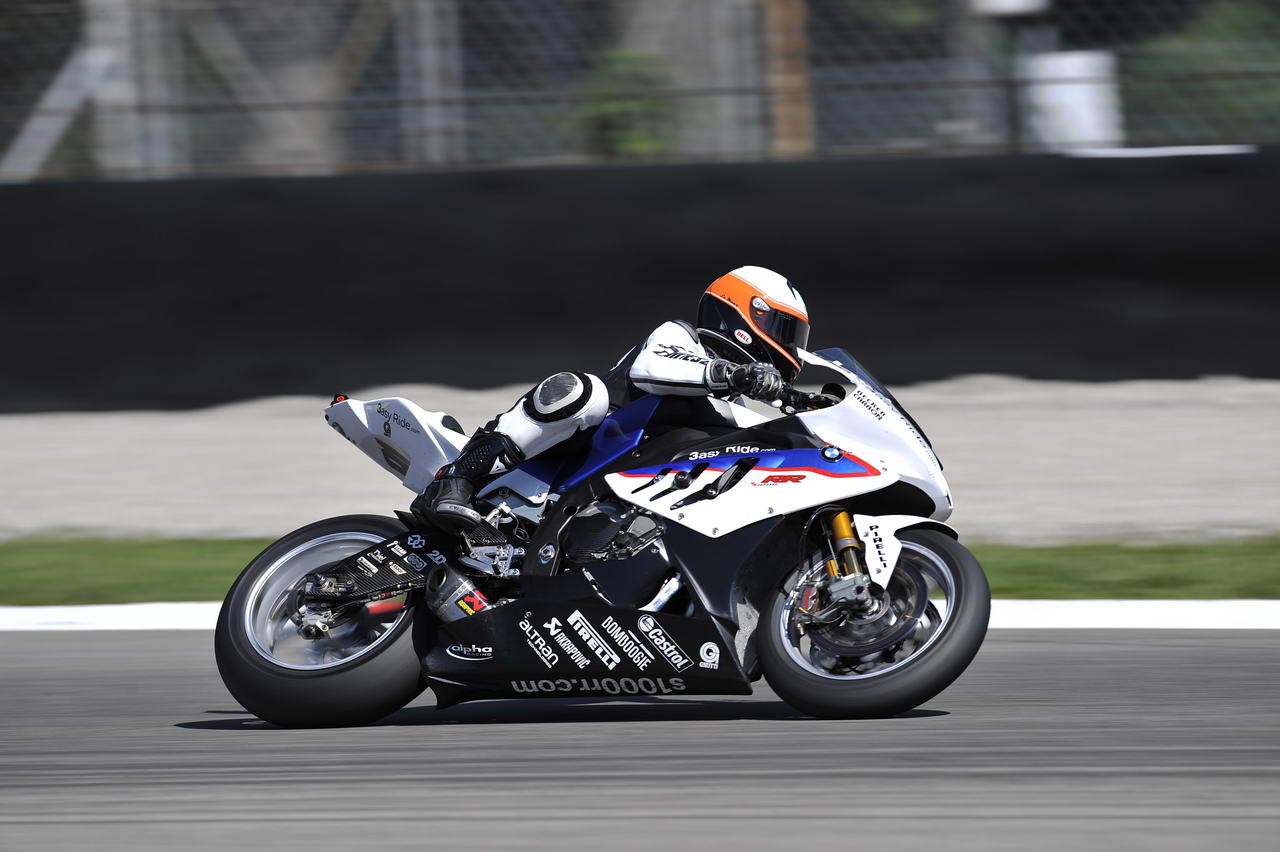
Our good friends over at OmniMoto.it have shared with us today their experience riding BMW’s World Supersport and World Superbike S1000RR machinery. Getting a chance to flog the bikes of Sylvain Barrier, Lorenza Zanetti, Ayrton Badovini, James Toseland, Leon Haslam, and Troy Corser around the famous Monza circuit in Italy, OmniMoto’s Lorenzo Gargiulo certainly had a tough day in the office. Even translated into English, this Italian bike tester is well…very Italian in his assessments, but we think the subtle differences between the Superstock, satellite Superbike, and factory Superbike shine through in his writing. Enjoy. — Ed.
There are opportunities in the moto-journalism profession that are to be jumped on, and this is one of them. I could tell you the story about how today, in order to reach Monza to try the three motorcycles I’m about to write about, I slept only 3 hours, or how I had to work on a Saturday, and how I had to somehow fit in 1,000 other obligations and make up a lot of excuses in order to free my schedule, but the basic fact is the following: the opportunity to ride on a track, three SWBK motorcycles is so overwhelming that everything else became of secondary relevance.
So, when I received the invite from BMW to go ride around Monza with the very best of its motorcycles, my response was simply the most obvious one… I’m COMING!
Standard, Superstock, & Superbike
I already participated last year in the test organized by BMW Motorrad Italy with the S1000RR Superstock, with which only a month later Ayrton Badovini used to crown himself the 2010 World Champion, and now that BMW Motorrad has redoubled its efforts with the WSBK Championship, the racing bike test has become an international event to which the whole international motorcycle press fleet is invited. The test in question entailed a progression that started us on a street legal, bone-stock, S1000RR, which helped us to warm up and get used to the newly refinished Prima Variante curve in Monza.
Our test then progressed to the Superstock bikes with which Sylvain Barrier and Lorenza Zanetti race, and continued with four laps in the seat of the S1000RR Superbike used by Ayrton Badovini and James Toseland of the BMW Motorrad Italia Superbike team. Lastly our test culminated in a final four laps on the WSBK-spec bikes normally ridden by Lean Haslam and Troy Corser. When I really think about it, last Saturday in Monza we were given a privilege that often is not even afforded to the above-mentioned riders…namely the ability to do a comparative ride between two motorcycles that are from the same family, and normally on the track are adversaries.

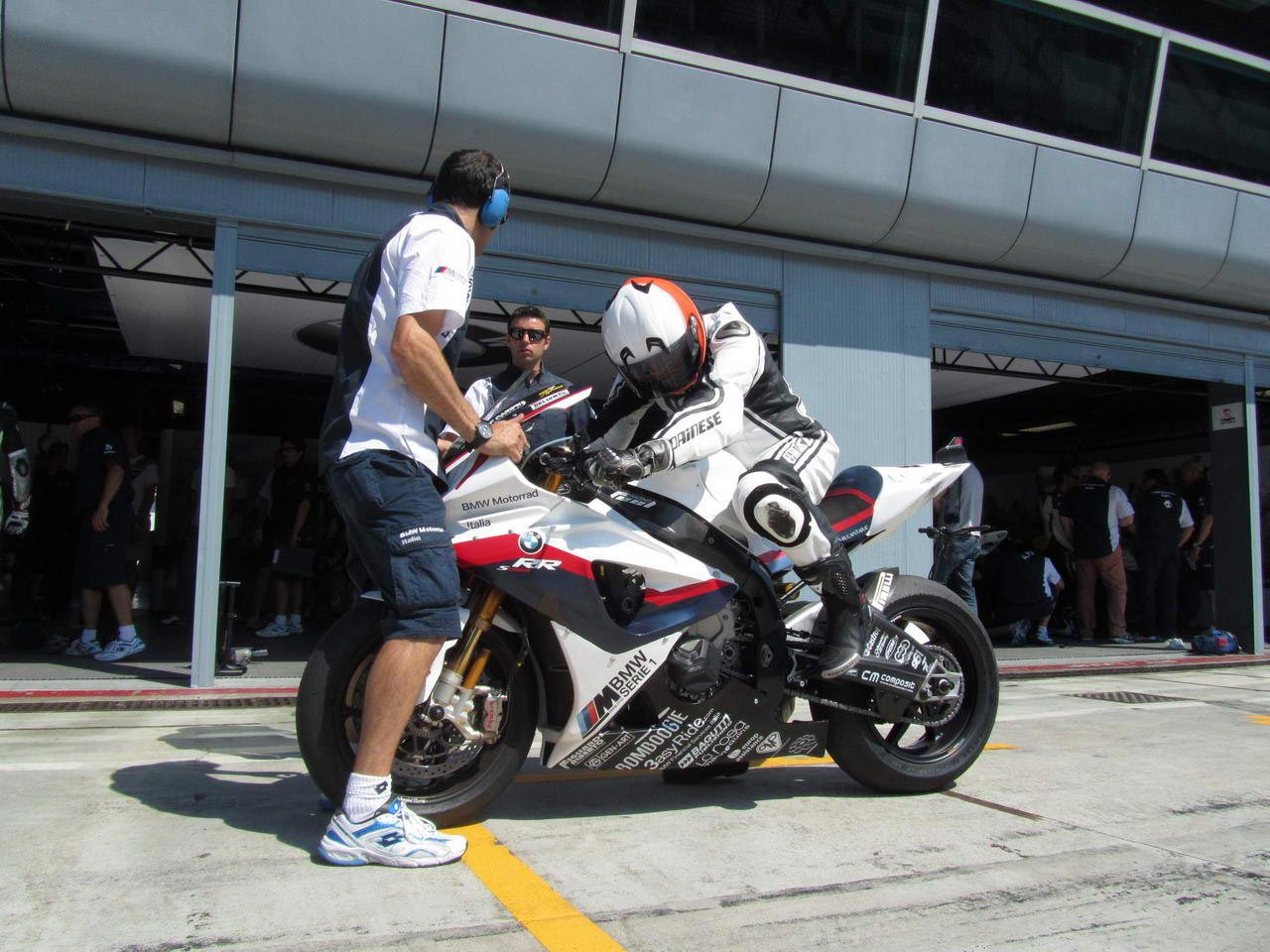
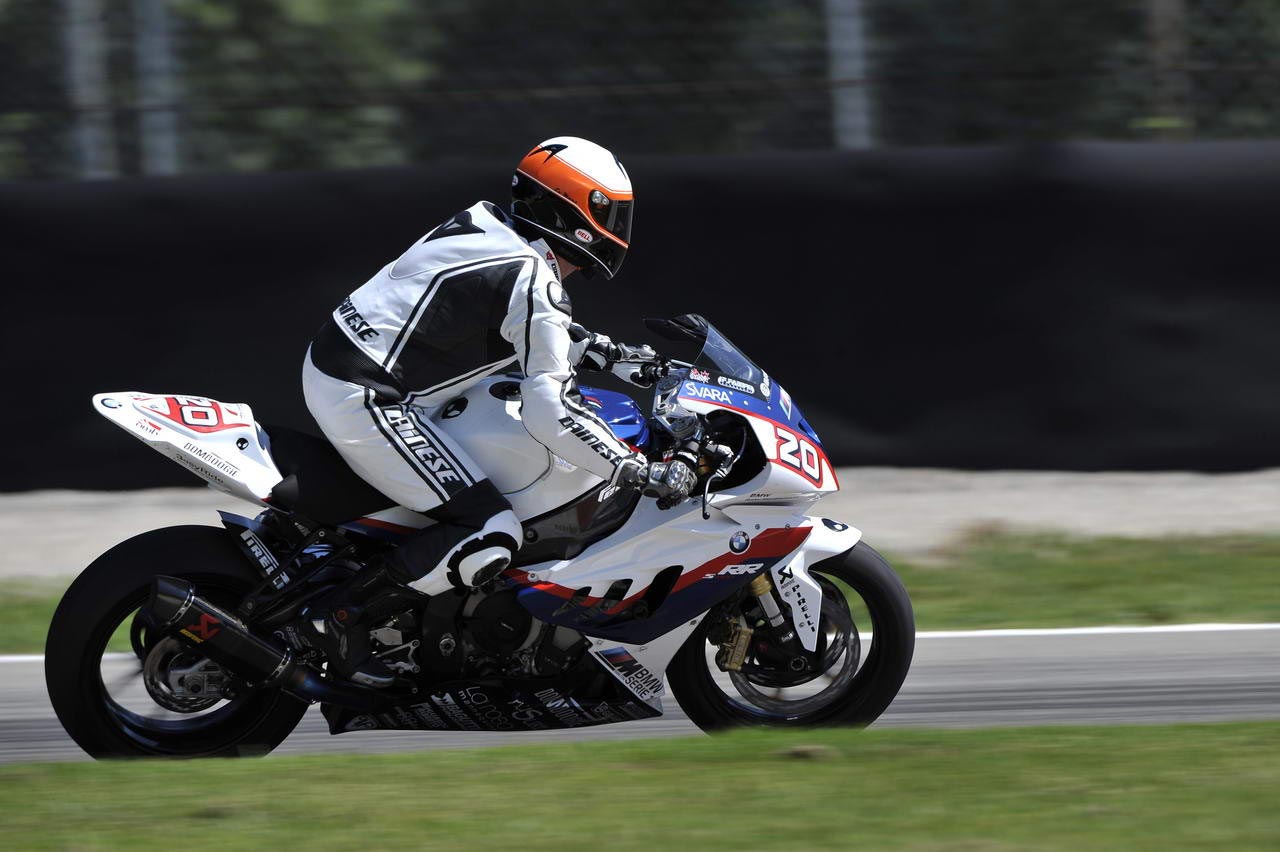
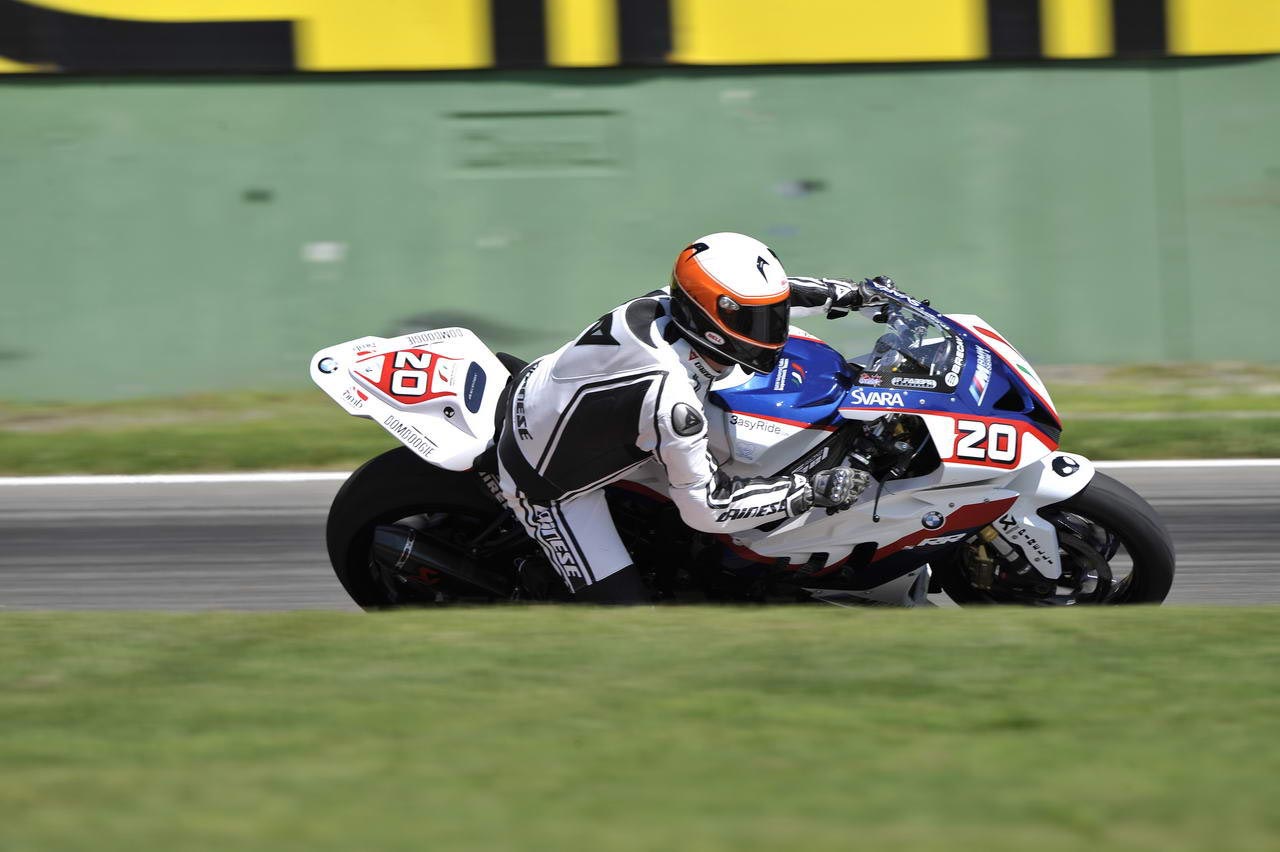
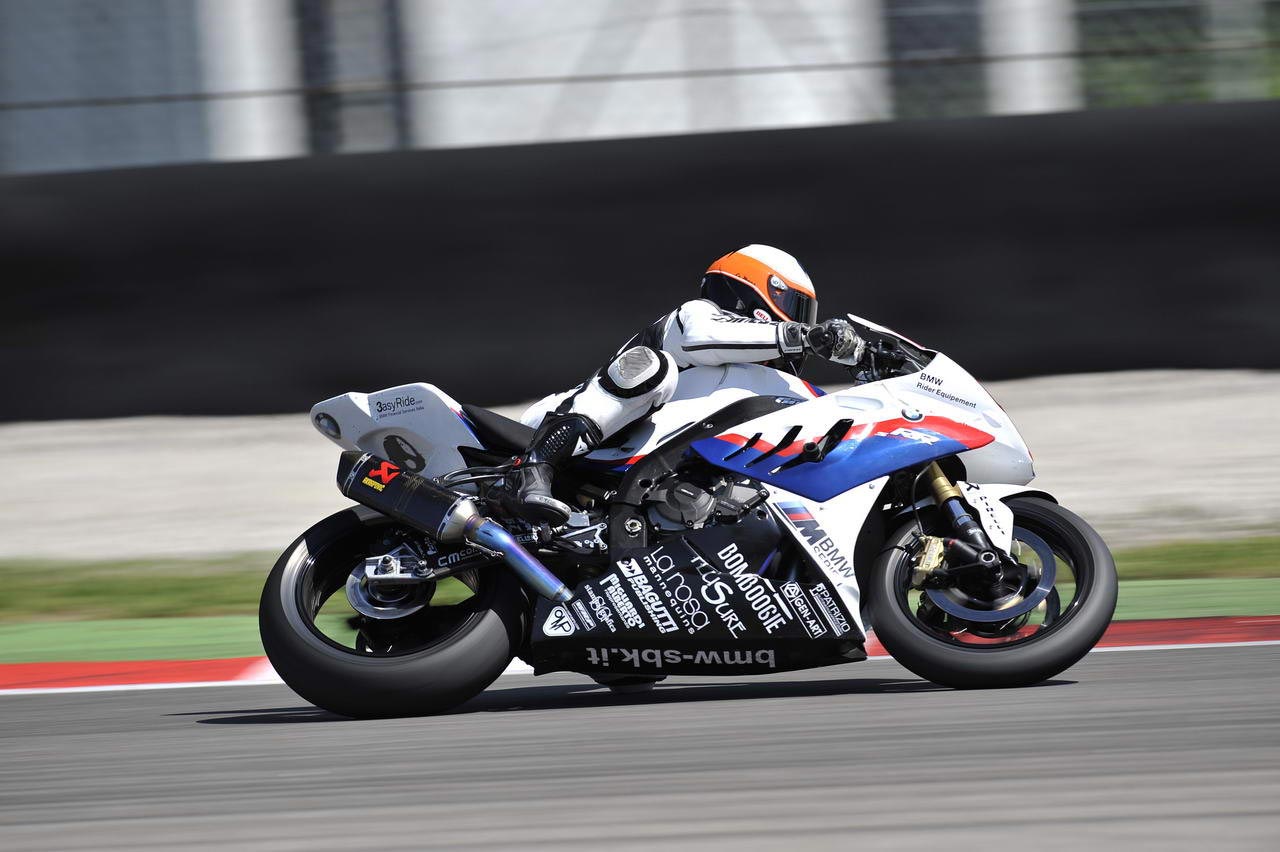
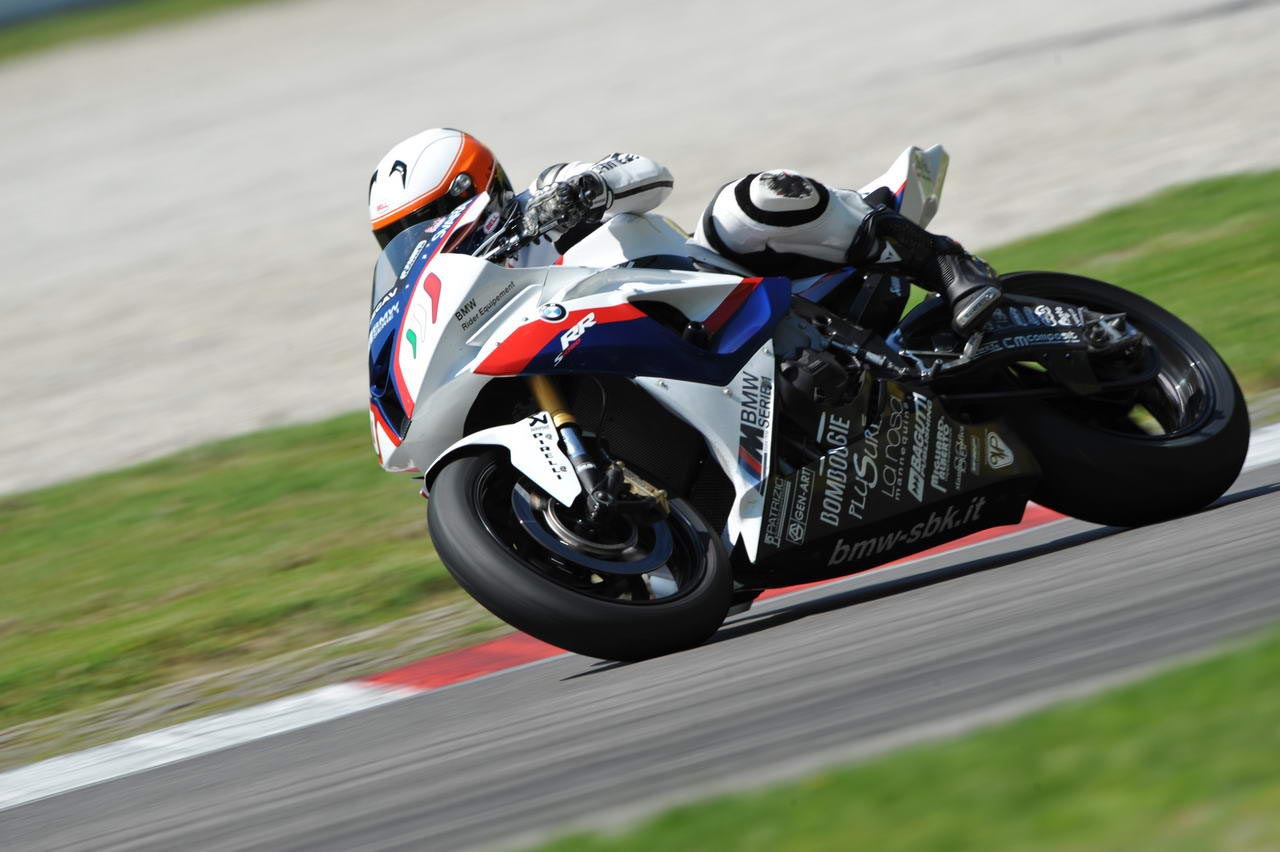
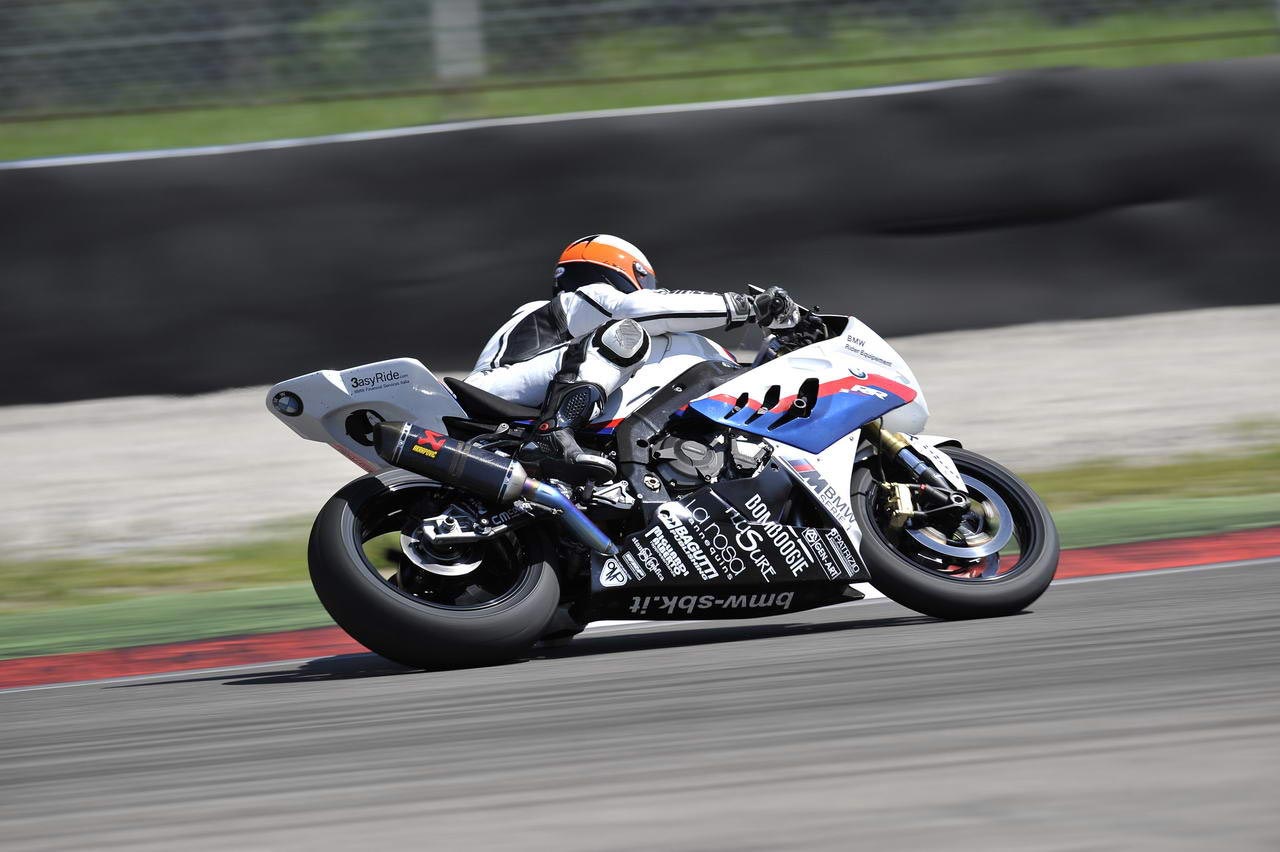
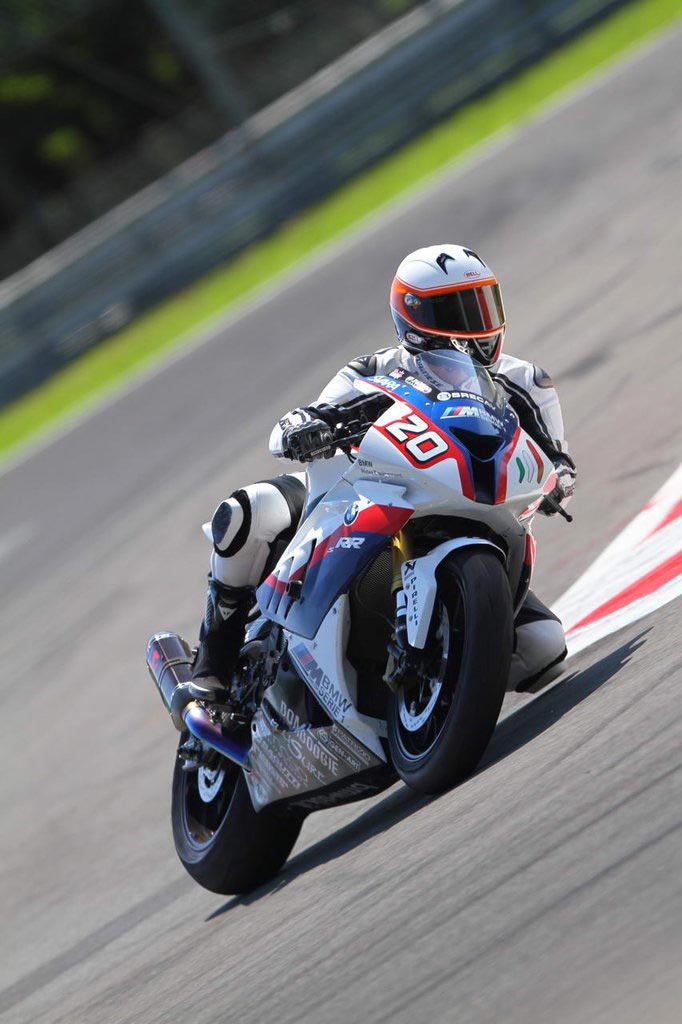
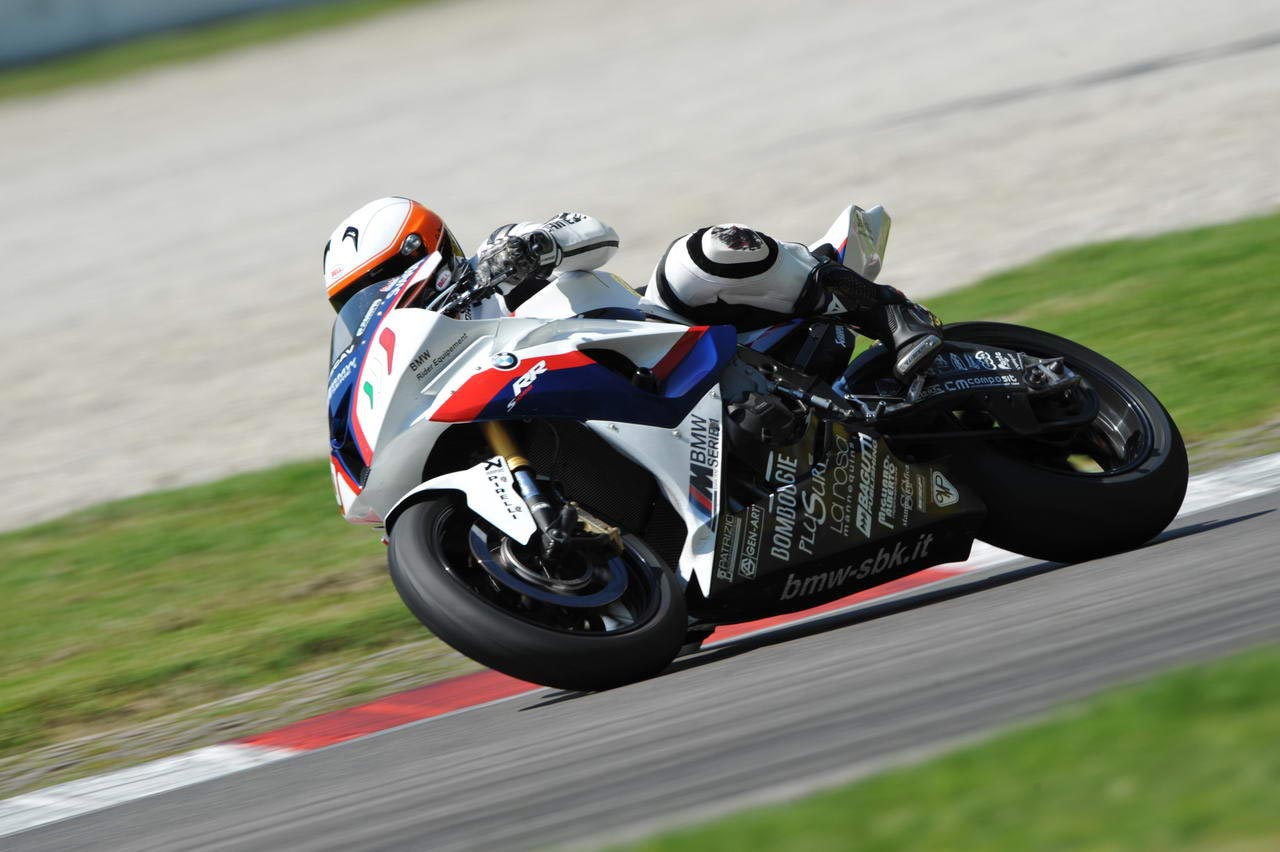
Superstock: Sylvain Barrier #20
The first surprise in the Monza test came from the S1000RR Superstock bike of Sylvain Barrier. I had tried this bike last year when Ayrton Badovini was riding on it, and even though I was working for another brand, I had enjoyed the ride enormously. With now a year having passed, I sat on this bike almost petrified by the differences that had occurred to this motorcycle over the past months. Ayrton’s bike from last year was easy, with supple suspension, and was well manageable in the braking zones, while Barrier’s bike from this year was hard like a rock. The French rider expects a very controlled ride, so consequently his forks have very rigid settings. This means that one must be absolutely on top of what he wants to do with the bike, because with a front-end that is so stiff, there are few possibilities for trajectory changes once you are set in a turn.
Even the rear of the bike is set extremely hard, which helps with the mid-line changes, and is where this year’s Superstock machine shows great traction as long as the surface of the track is very smooth. One has to say that at Monza, where there aren’t many back and forth corners or tight turns, it is advantageous to have a stiff suspension setup, but in my opinion these settings used by Barrier are excessive. On the exit of the Varianta Ascari turn, one has to stay far from the tightest inside line, because if you happen to ride onto the edge, as one normally might do, Sylvain Barrier’s BMW starts to shudder as the suspension doesn’t absorb the bumps, making a rider lose precious time. In addition to this, Barrier adopts a riding position with an extremely high seat, which reduces further the comfort level that one can attain with the BMW S1000R. In braking for example, one must squeeze very hard with his knees on the gas tank to avoid the unpleasant feeling of being catapulted forward, whilst having to counteract all the bike’s inertia with your arms.
The engine of the BMW S1000RR Superstock is only slightly different compared to the original. The lack of butterfly valves in the exhaust slightly reduces the backpressure, and consequently the torque at low revs, so it is best to keep the engine towards the top-end of the rev range. Up high, the four cylinder from Munich tends to rev more freely compared to the stock engine, but the power differences are however negligible. My verdict as soon as I got off Sylvain Barrier’s #20 bike was undoubtedly uncontroversial: the engine is great, the brakes are good, and the transition and corner speed is also an improvement over the stock machine. However, such a stiff suspension setting is not the most adept solution for a bike that wants to win races. It would have been useful to also try Lorenzo Zanetti’s bike as those who have had a chance to try the #87 machine, found the bike to be much more balanced, and with a riding position that is definitely less exclusive. Unfortunately our test only allowed for us to try one bike per segment.

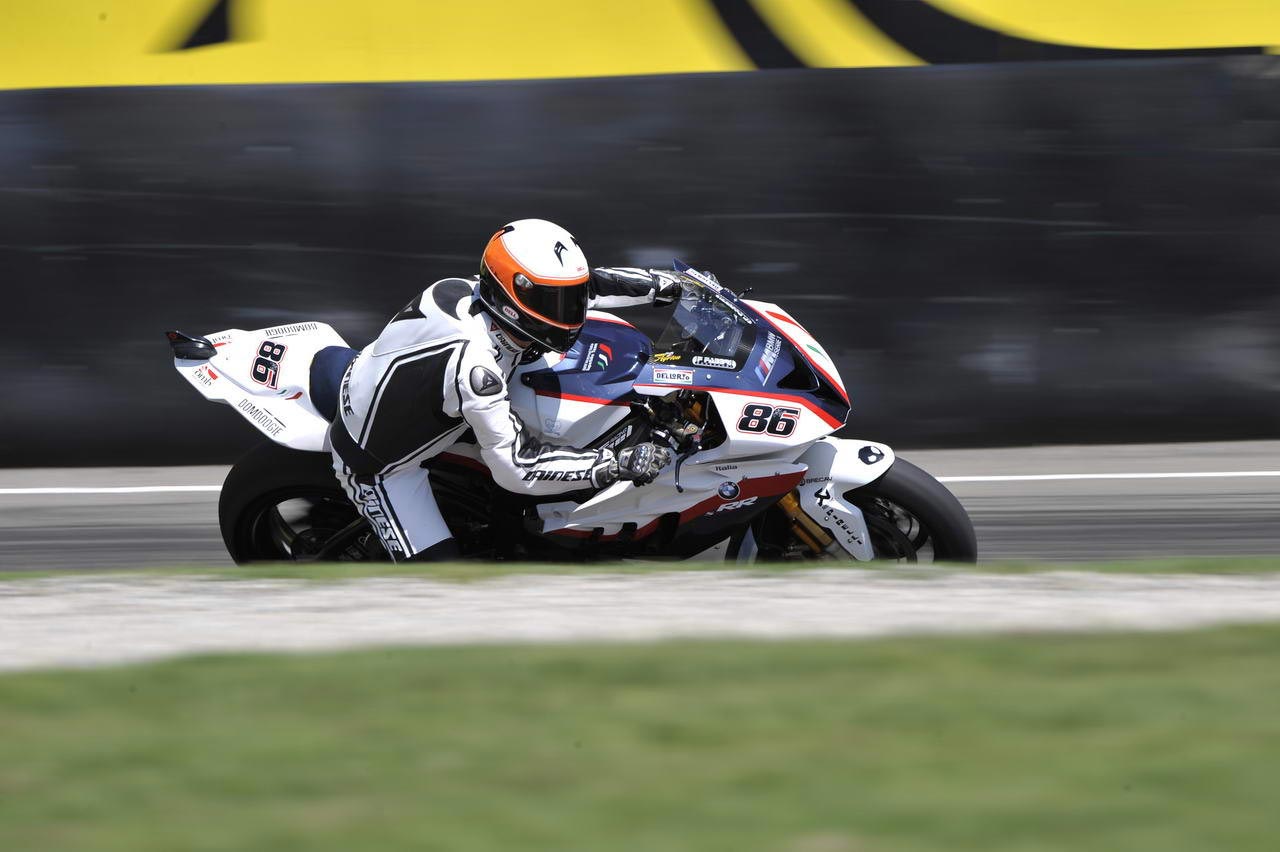
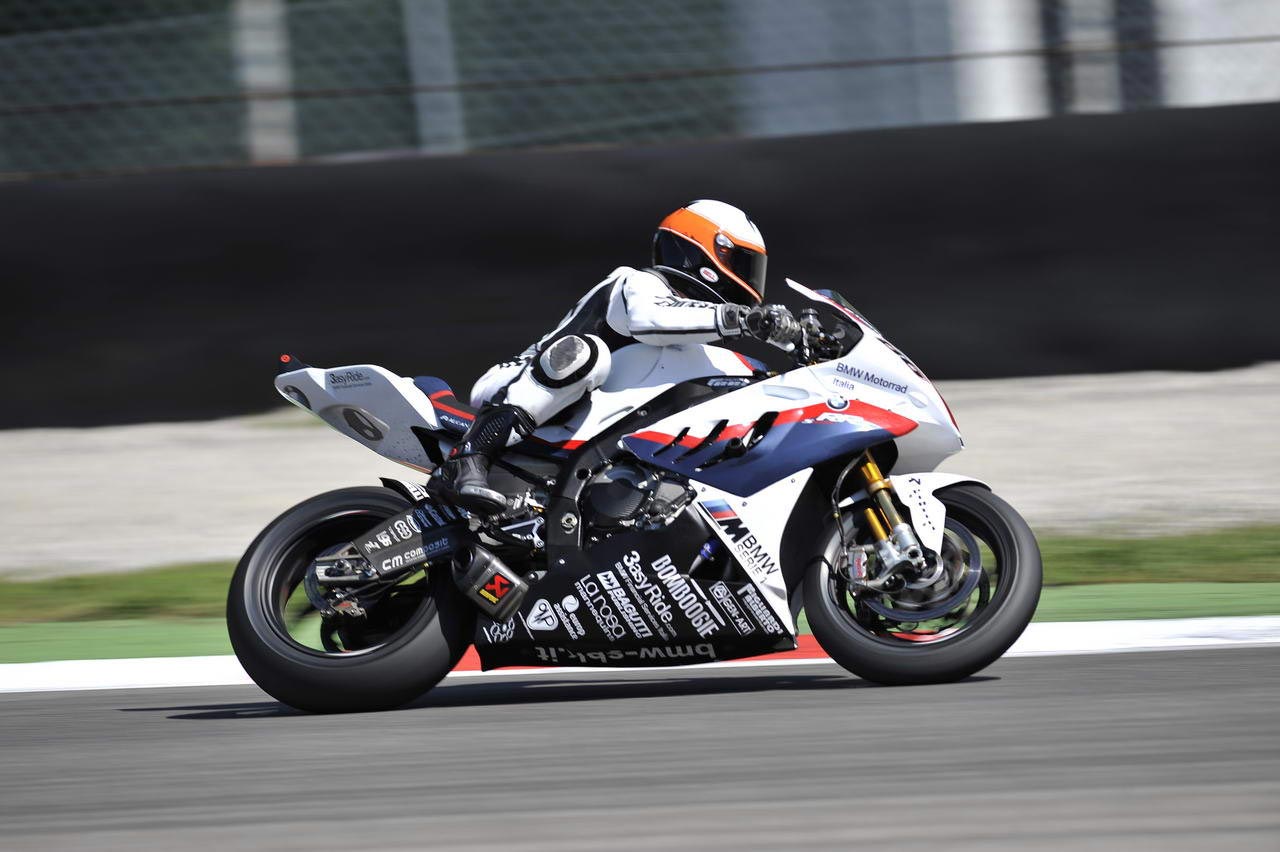
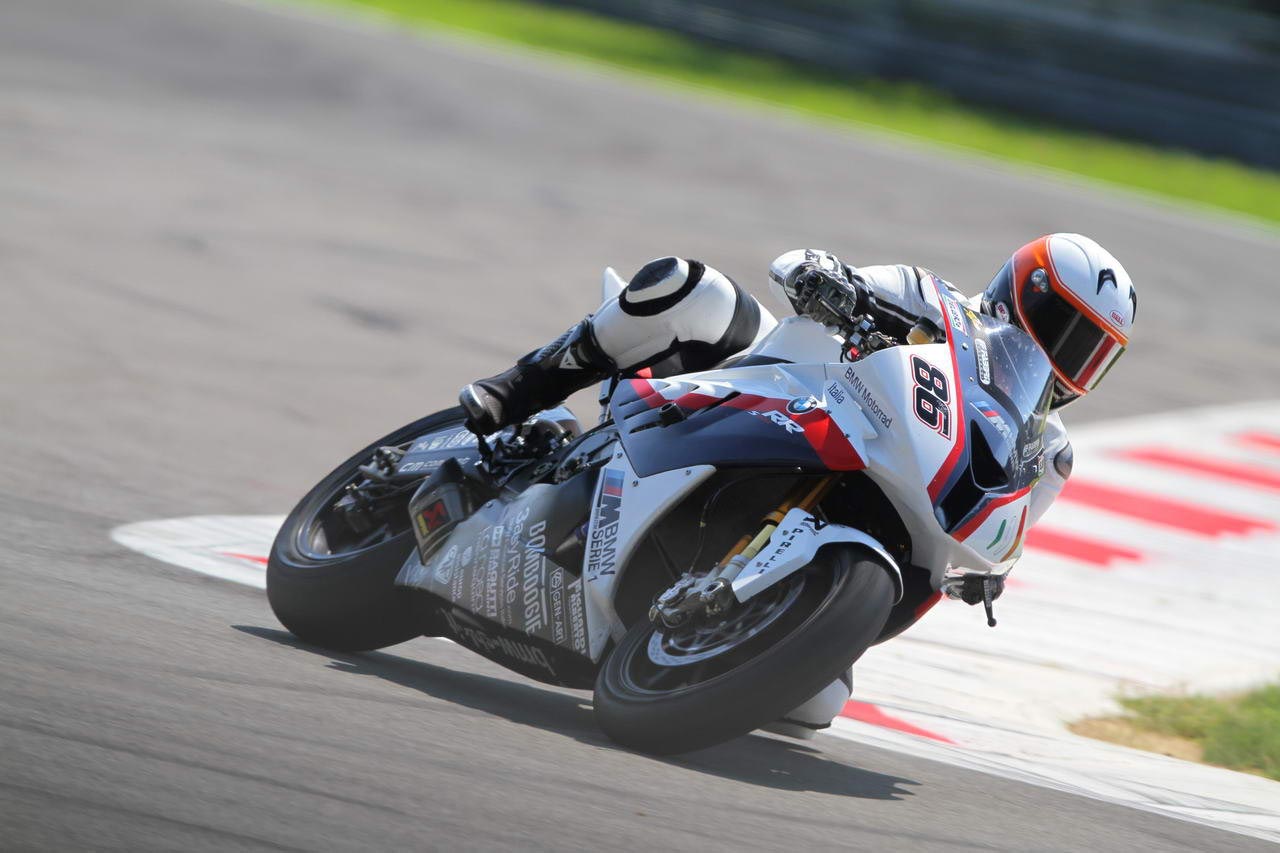
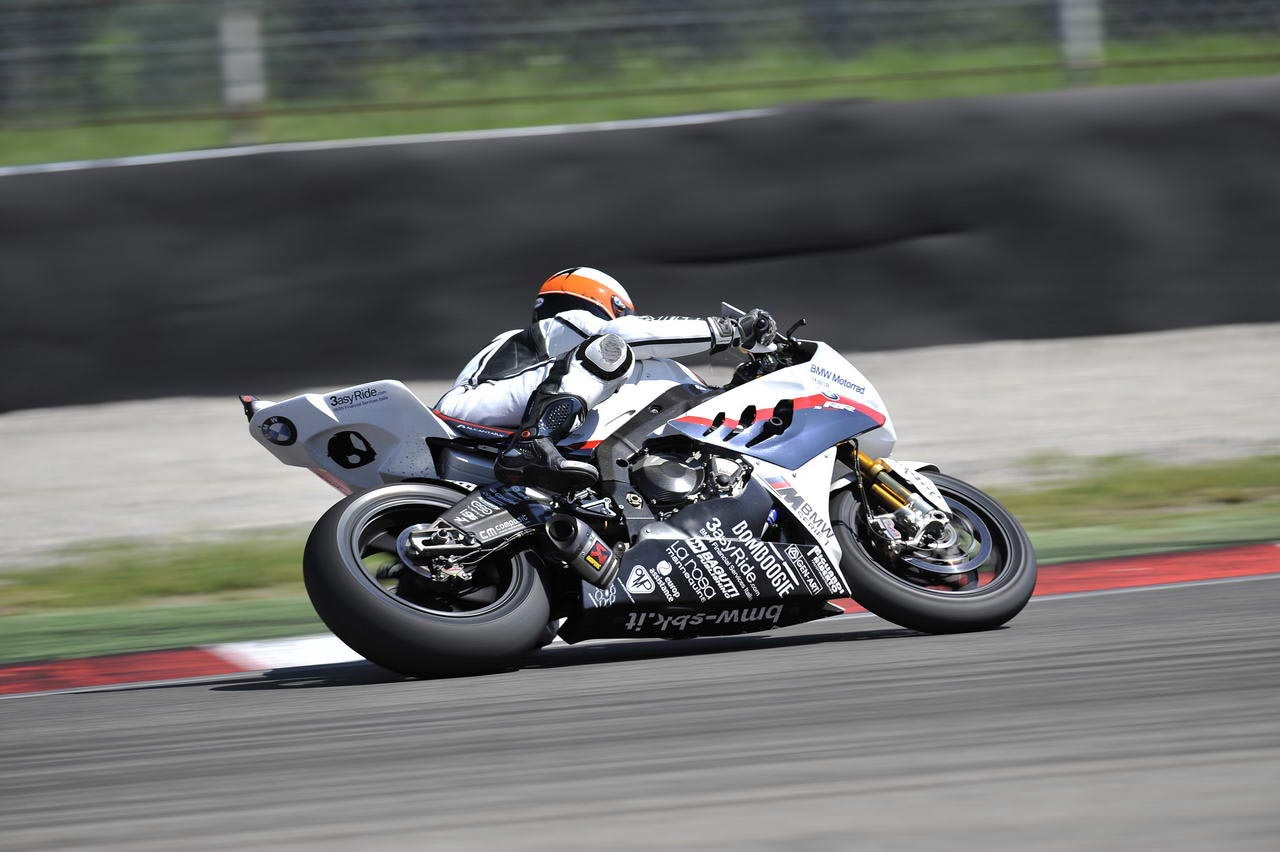
Superbike: Ayrton Badovini #86
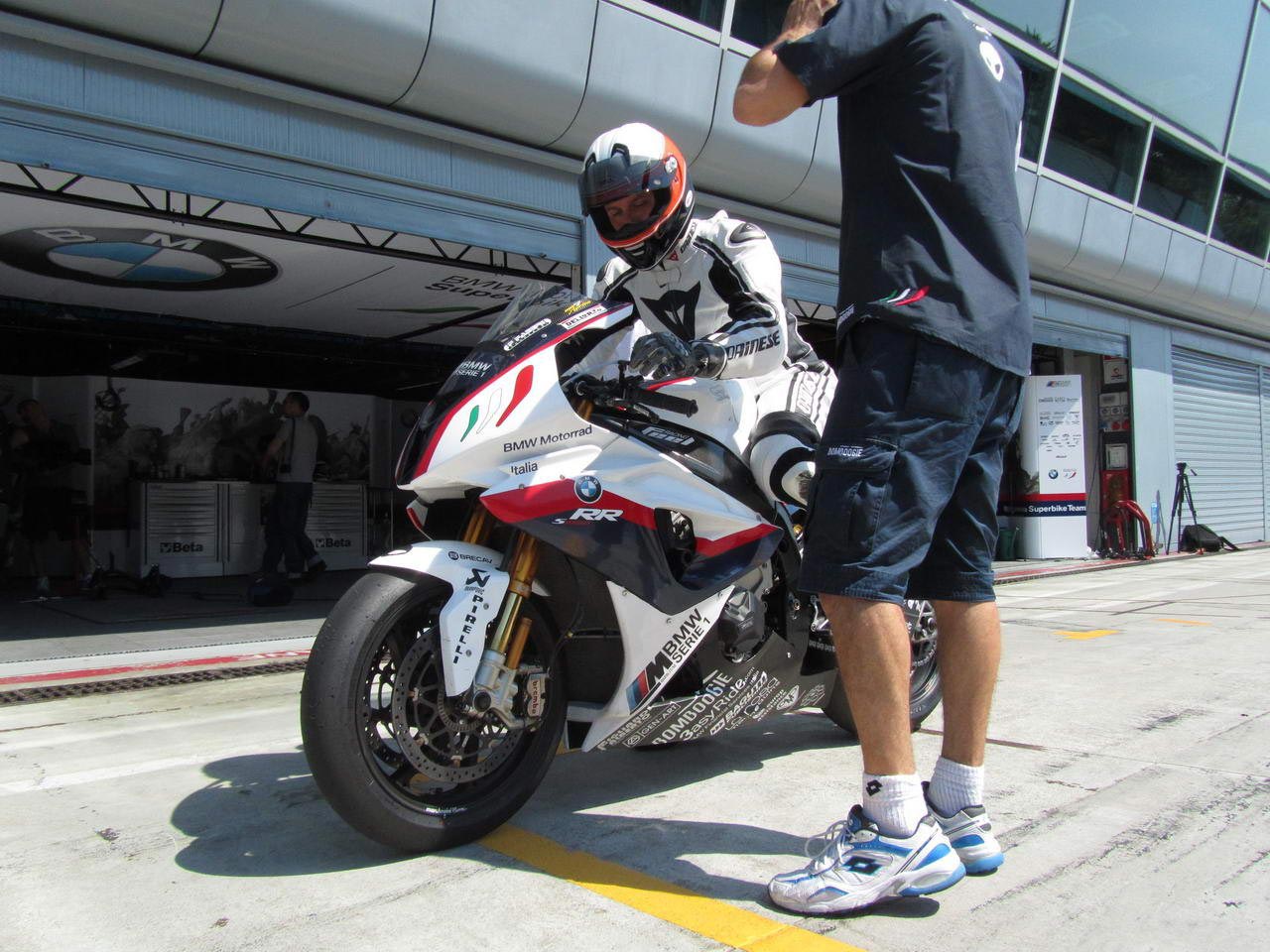
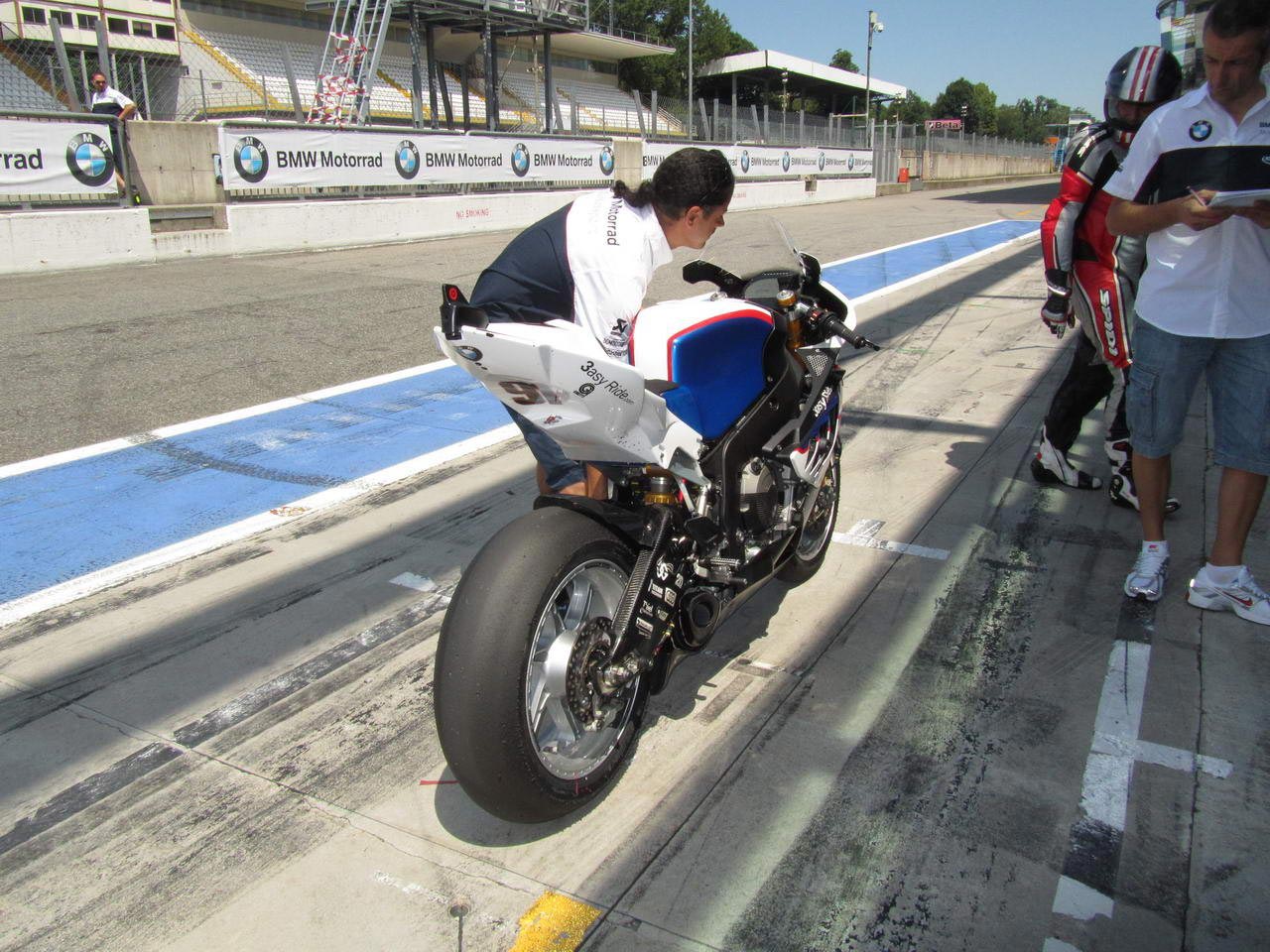
Only a few steps, and I reach the adjacent garage to find the #86 S1000RR belonging to Ayrton Badovini all prepped and ready to go. Hopefully James Toseland doesn’t read this and get upset, but I was especially looking forward to trying Ayrton’s bike, not only because I know the racer’s great bike development skills, but also because I have a long-standing friendship with him from a time way back when nobody even knew his name, and when the Italian was still trying to establish himself in the racing world.
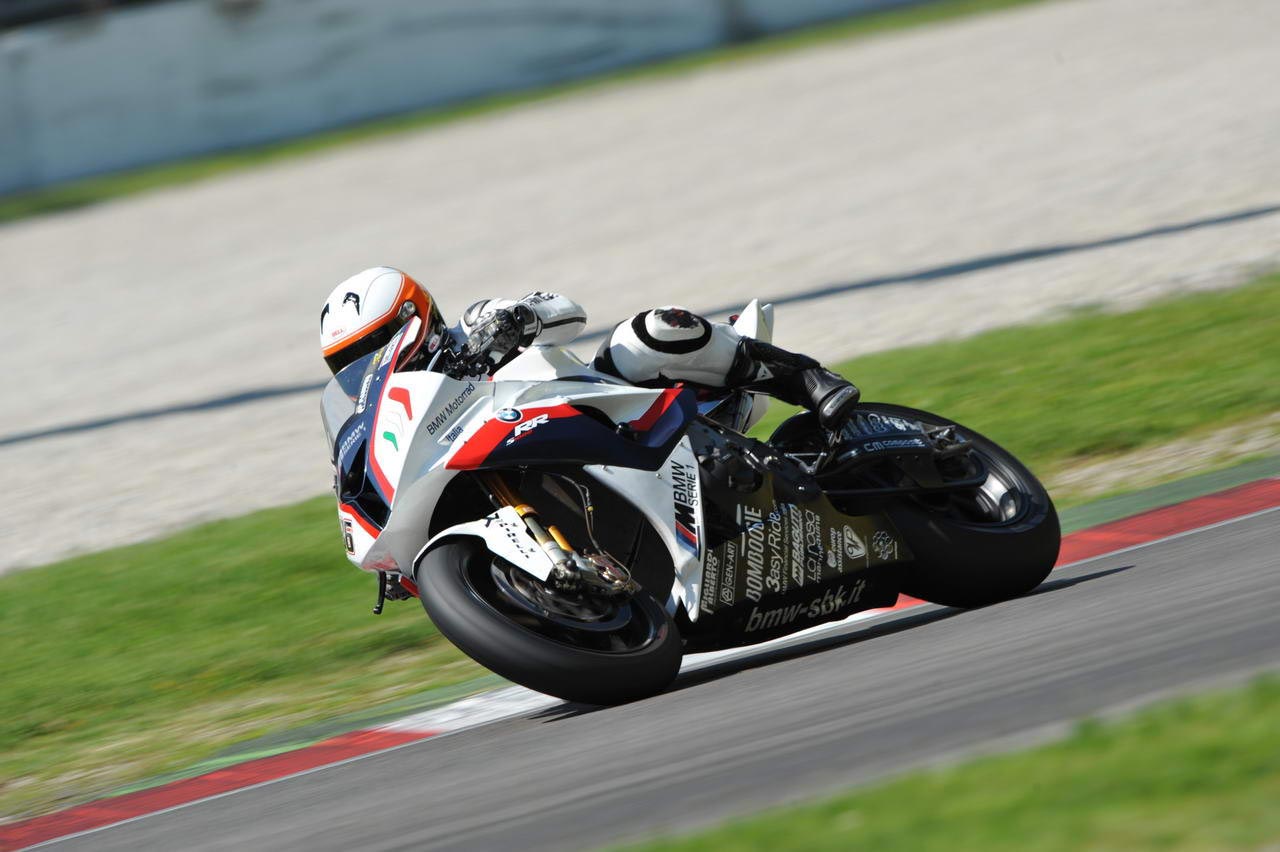
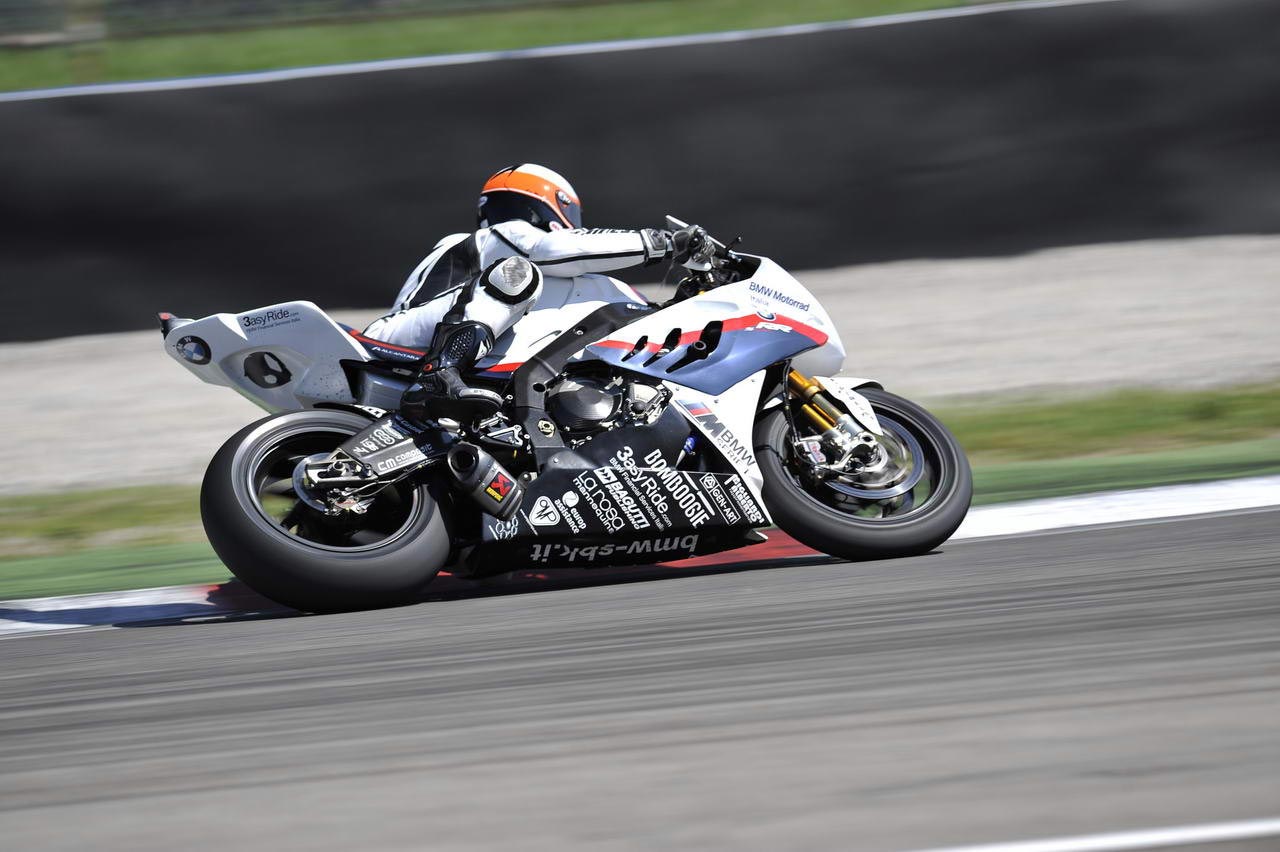
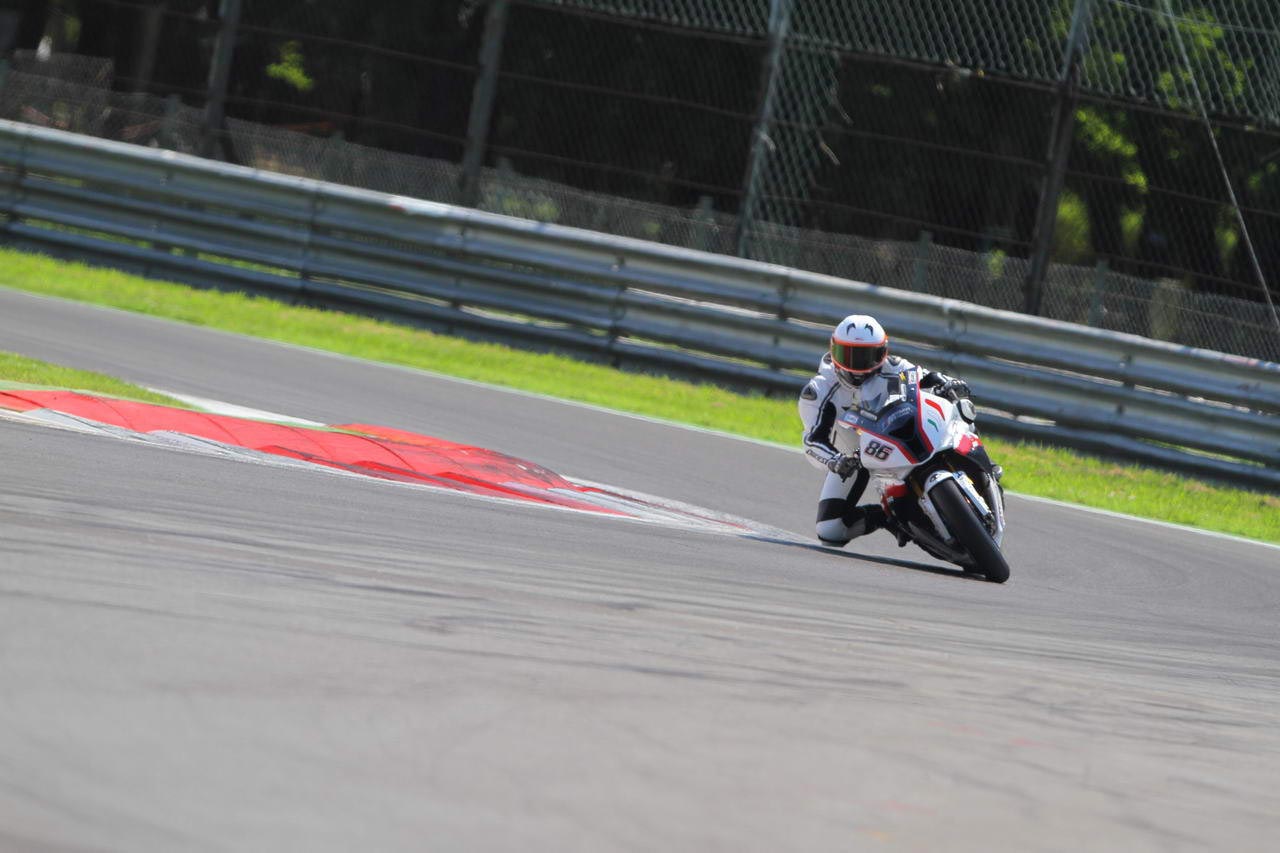
A few meters are all that is necessary to be enraptured by this bike. The suspension and chassis are perfectly balanced, and the feedback that one receives from this bike makes it extremely easy to ride. The chassis is perfectly center-balanced, and the Öhlins suspension (which are the “Kit 2011” version while on the German team uses the “Official Öhlins 2011” pieces) is extremely smooth and supple. The #86 machine makes it clear that the excellent results with which Ayrton has had throughout this Championship season are the fruits of a chassis and engine that have been constantly fine-tuned over the course of the season.
The chassis is truly on-point: in braking the Öhlins front fork is like butter, and the Brembo braking system allows you to apply the brakes well past the point when your sense of self-preservation would tell you to stop. Corner entry on the S1000RR is fast but progressive, and offers a great feeling of safety. On corner exits, the Öhlins TTX rear shock is exceptional, and is able to combine the need for tire adhesion with bump absorption. From the apex and on, the traction control is very helpful to the rider in understanding where he can push with the power application. The traction control’s activation point on Badovini’s bike is noticeable, but very smooth in its action. Already at mid-turn one can open the throttle to the stop while aiming towards the outside of the turn, and feel that the TC is offering the maximum available traction and control to the rider.
The power delivery deserves special mention, as the BMW Italia mechanics have been able to create an engine map for the S1000RR that enables the horsepower to always arrive in a controlled and composed manner. In the tighter sections at Monza, one can also appreciate the effect that even very small variations in throttle openings can have on the power delivery, as the on-off abruptness is practically non-existent on Badovini’s BMW. Once the revs are increased, the S1000RR’s power delivery shows an elasticity that is simply unrecognizable in the Superstock version.
Here you feel all the power, but it always exhibits itself in a smooth and non-scary way to the rider. Another characteristic that I especially liked was this particular type of slipper-clutch system, which allows the rider to break hard without the rear losing traction, but with enough engine braking to be used as an aid to the rider. Unfortunately, like all wonderful moments, my test on Andrea Badovini’s bike ended too soon, and I had to move on to Leon Haslam’s bike.

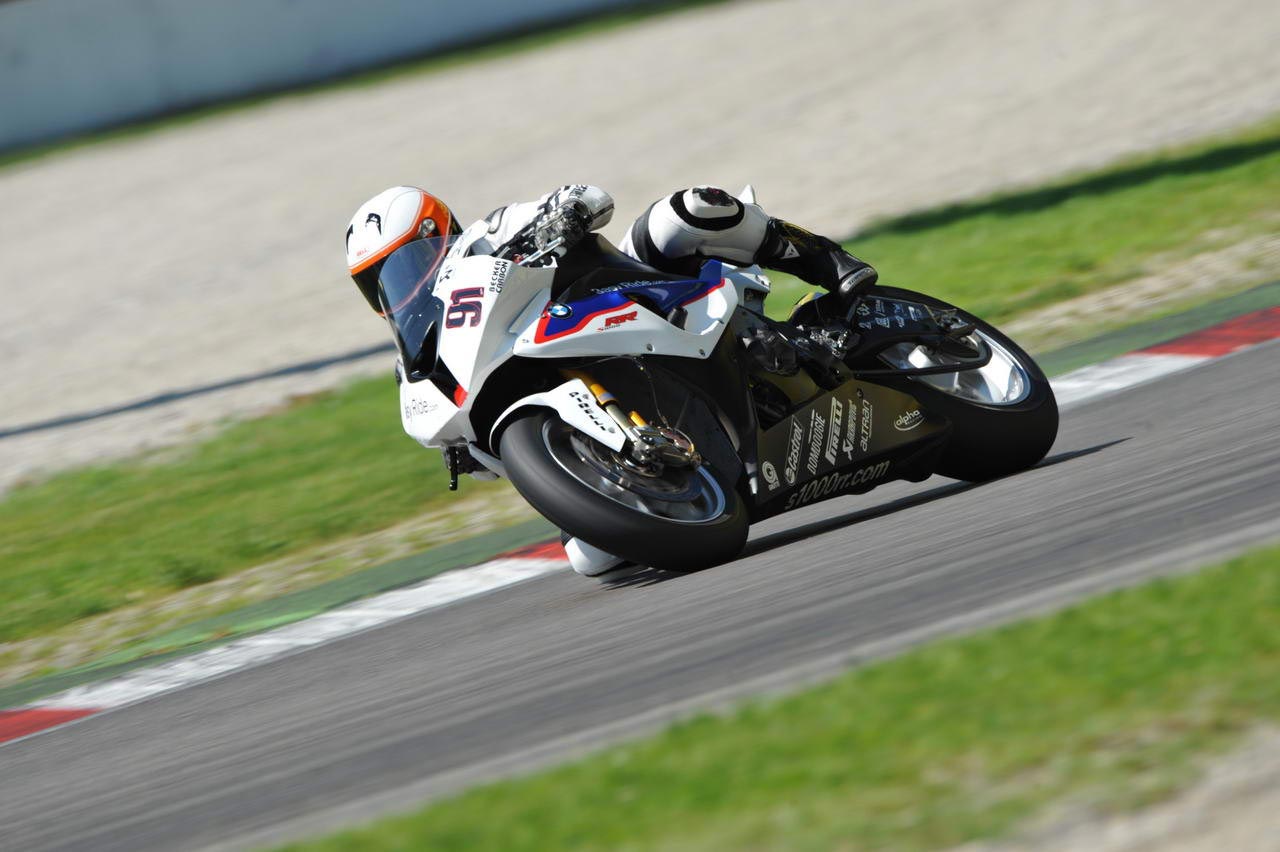
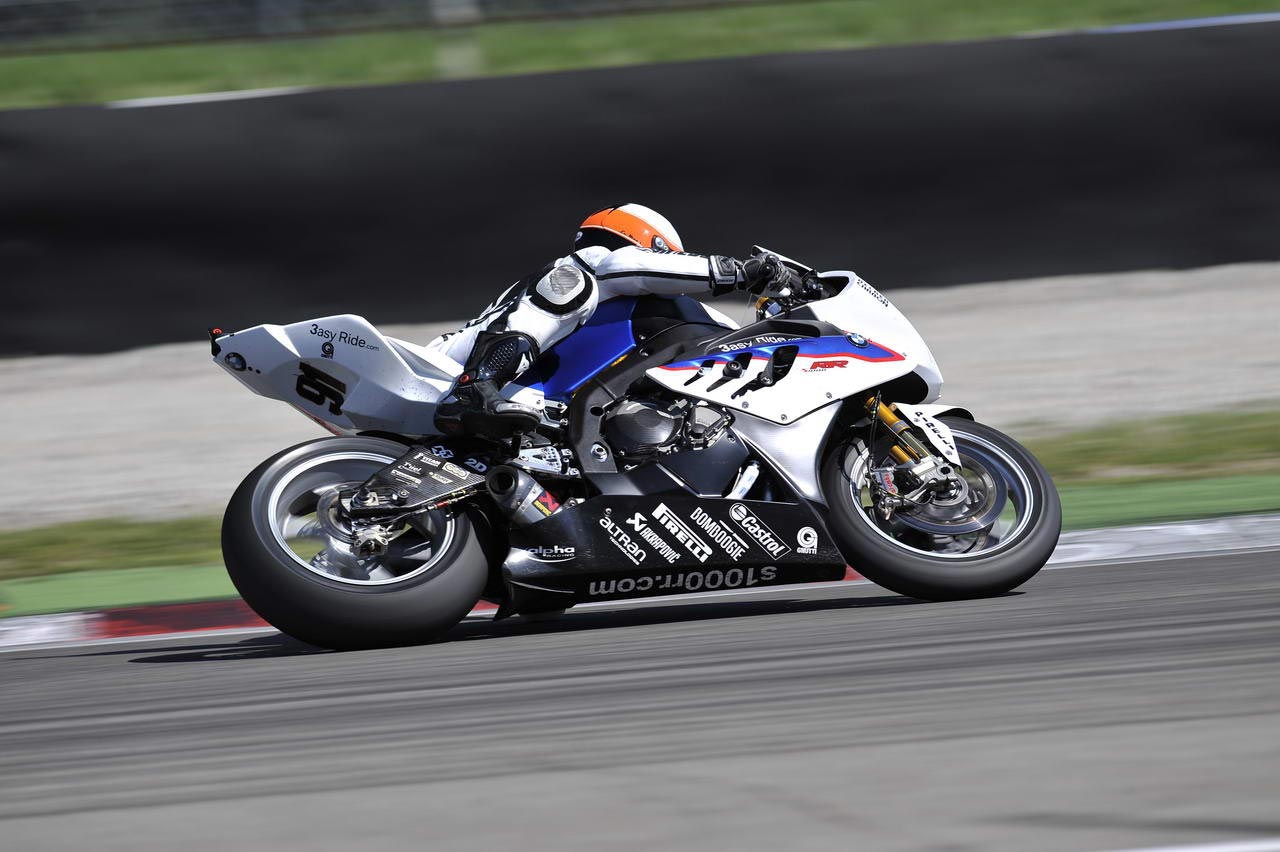
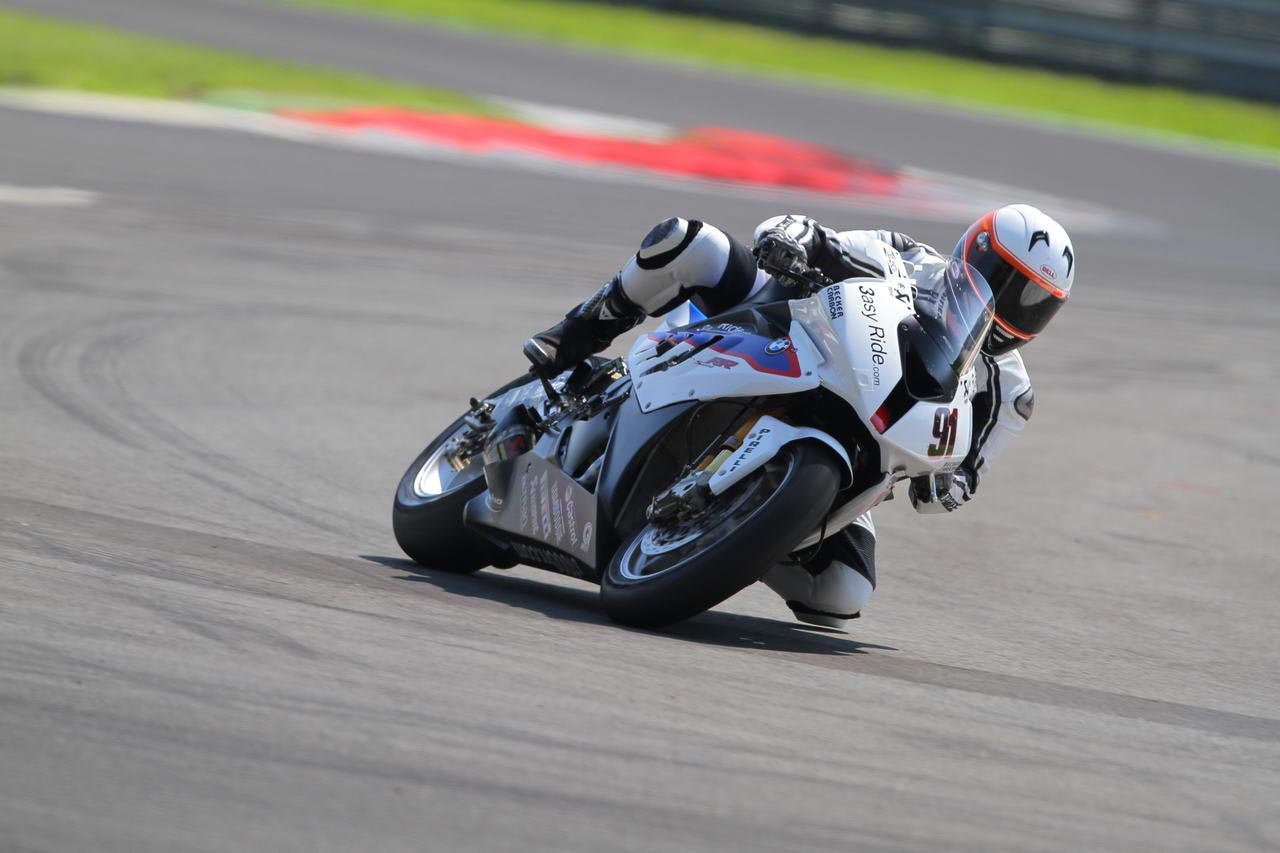
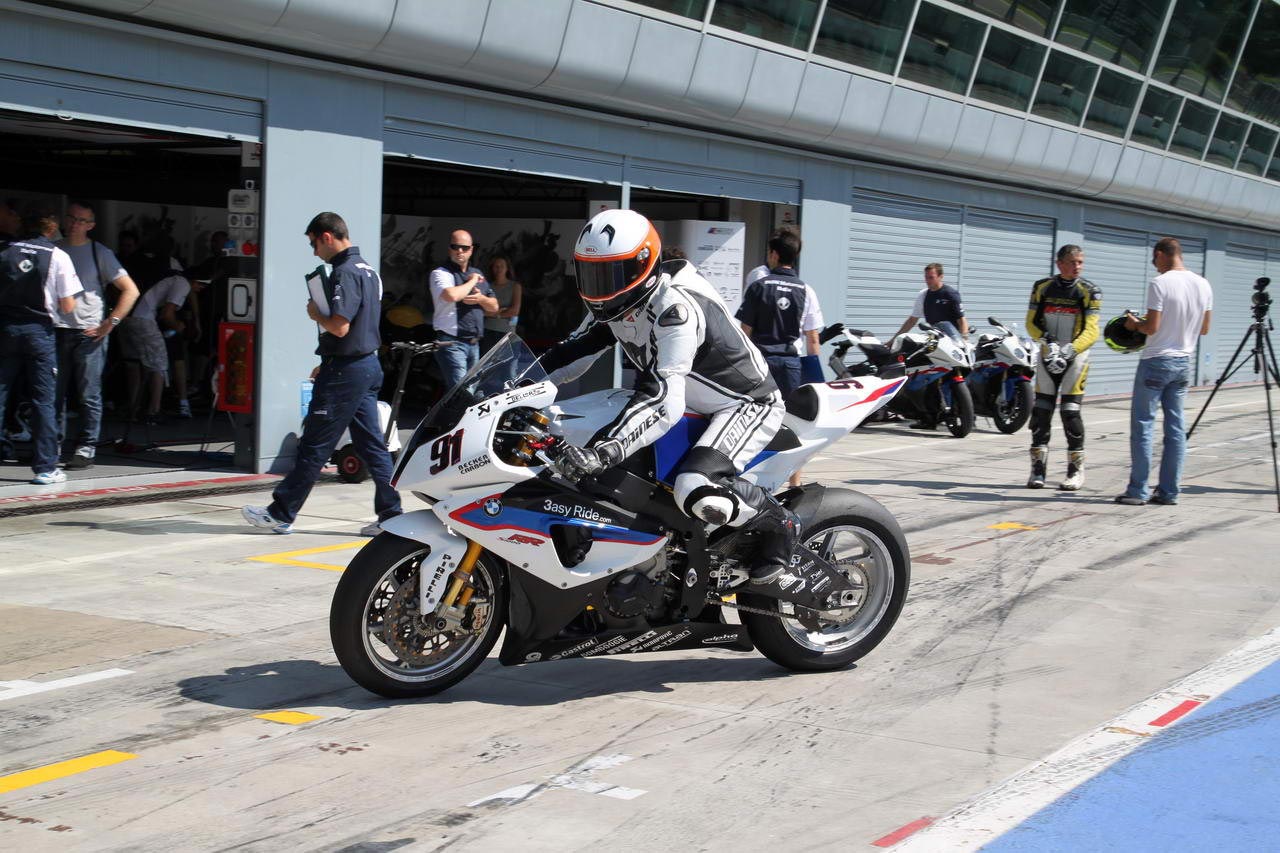
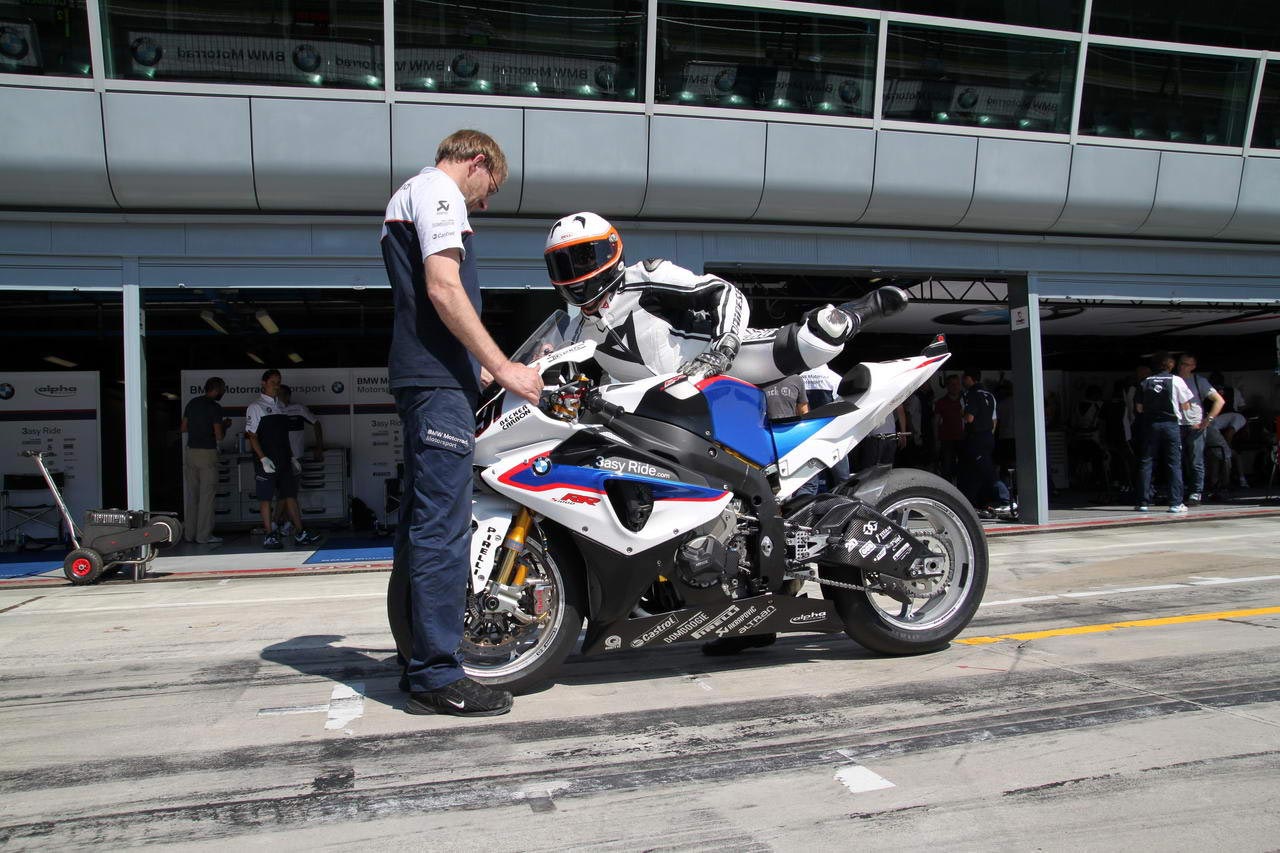
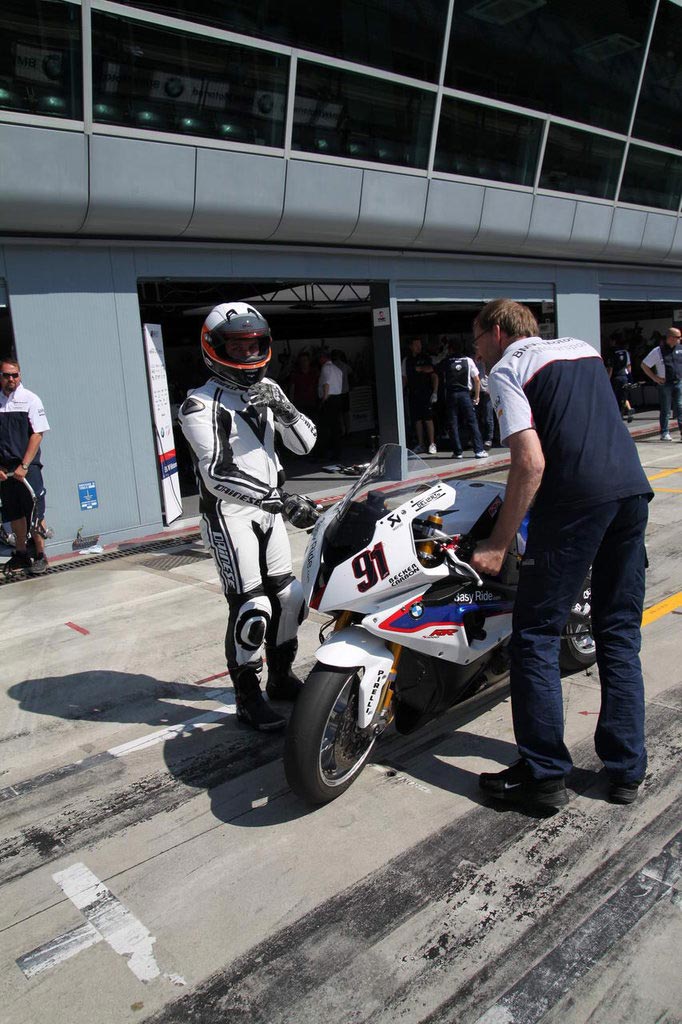
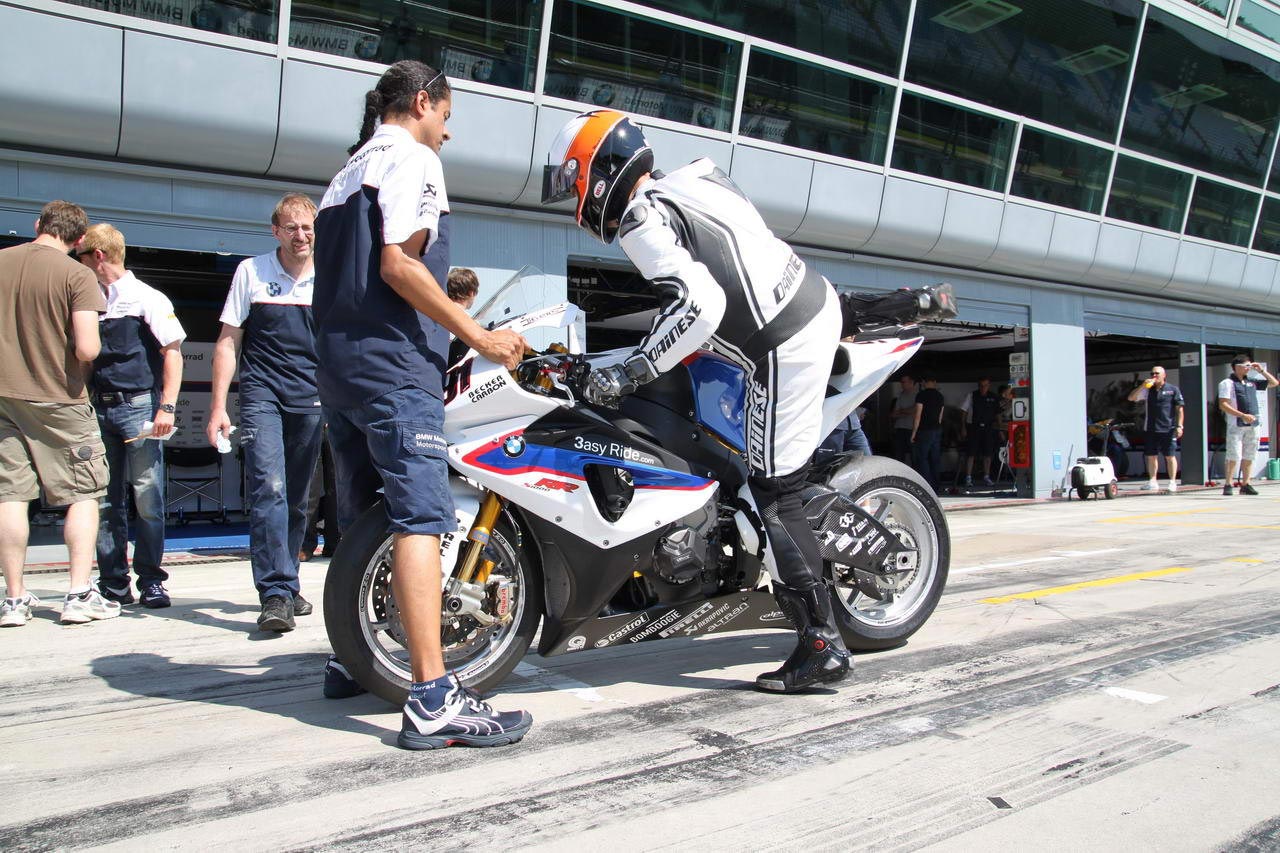
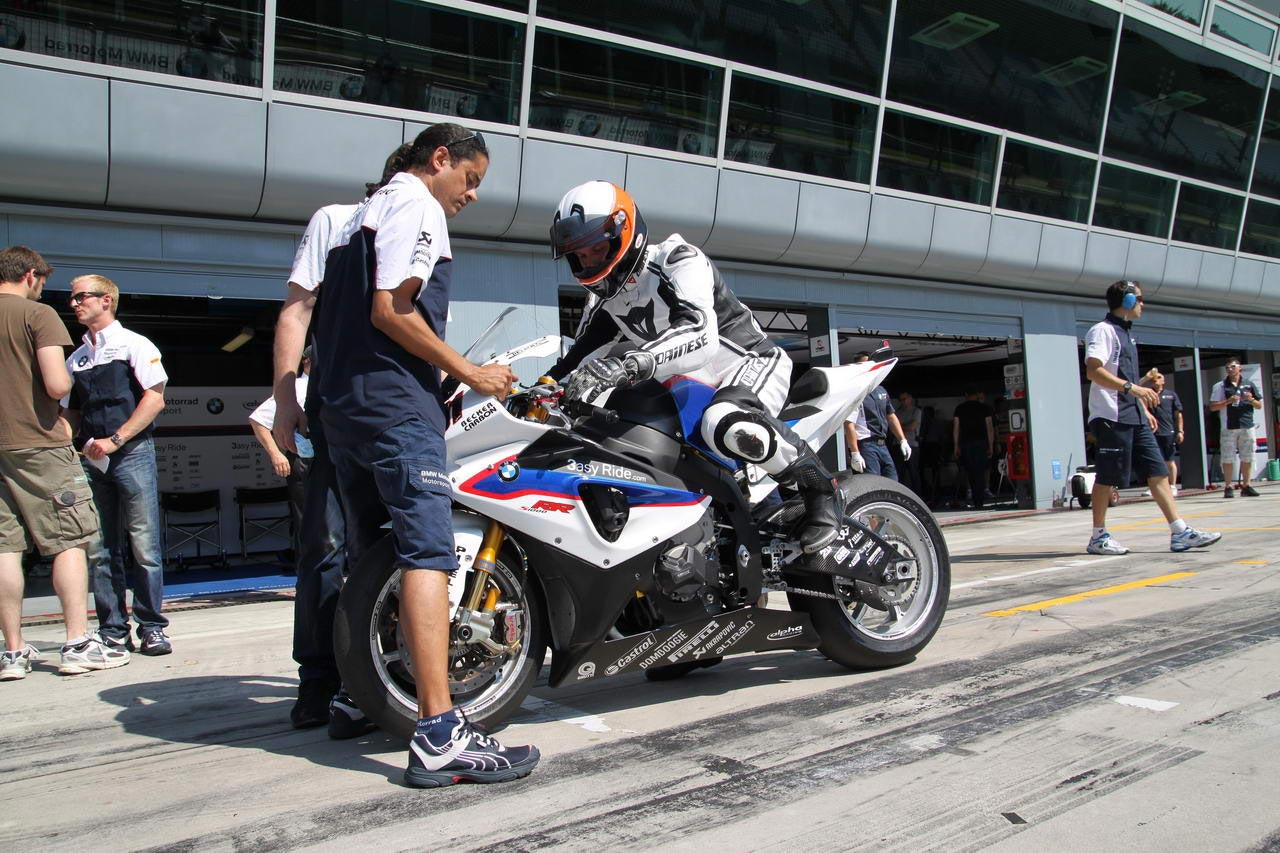
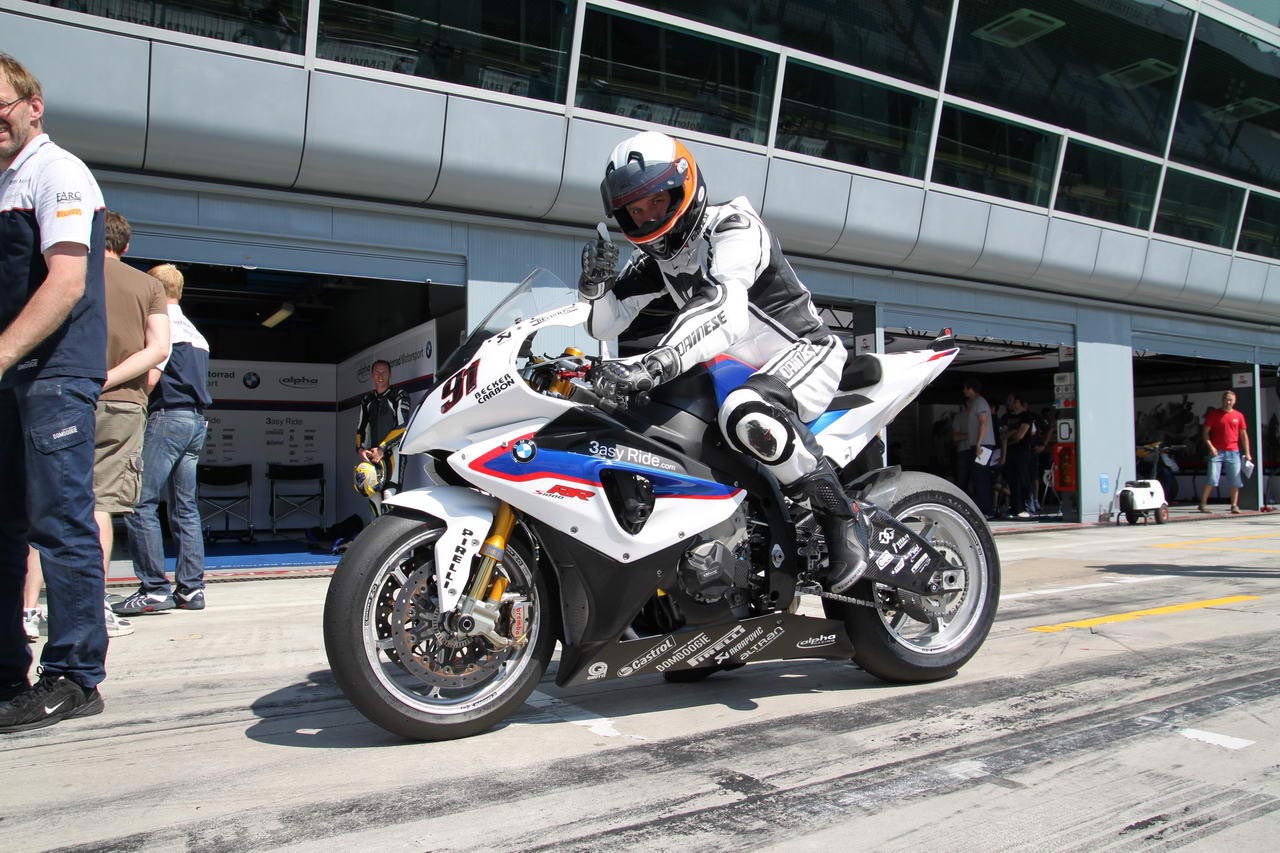
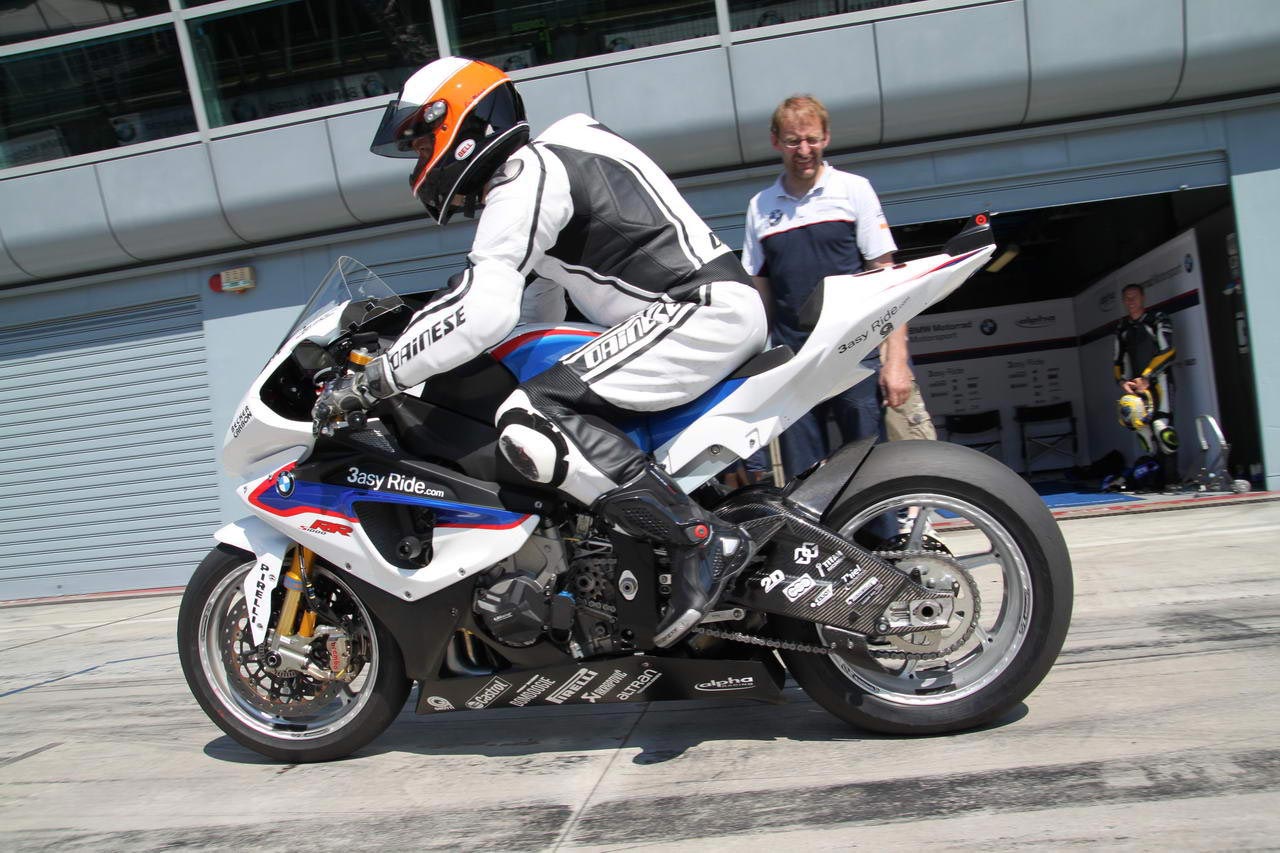
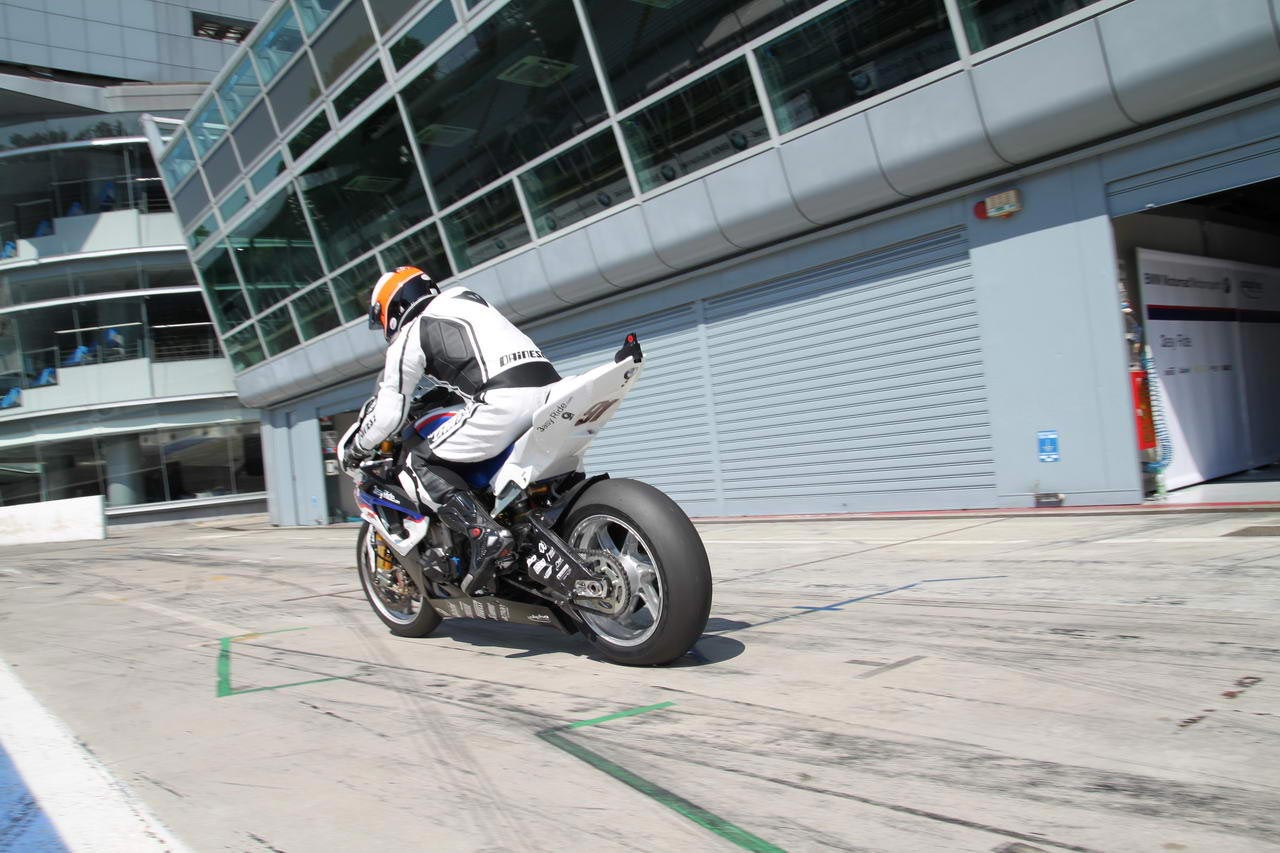
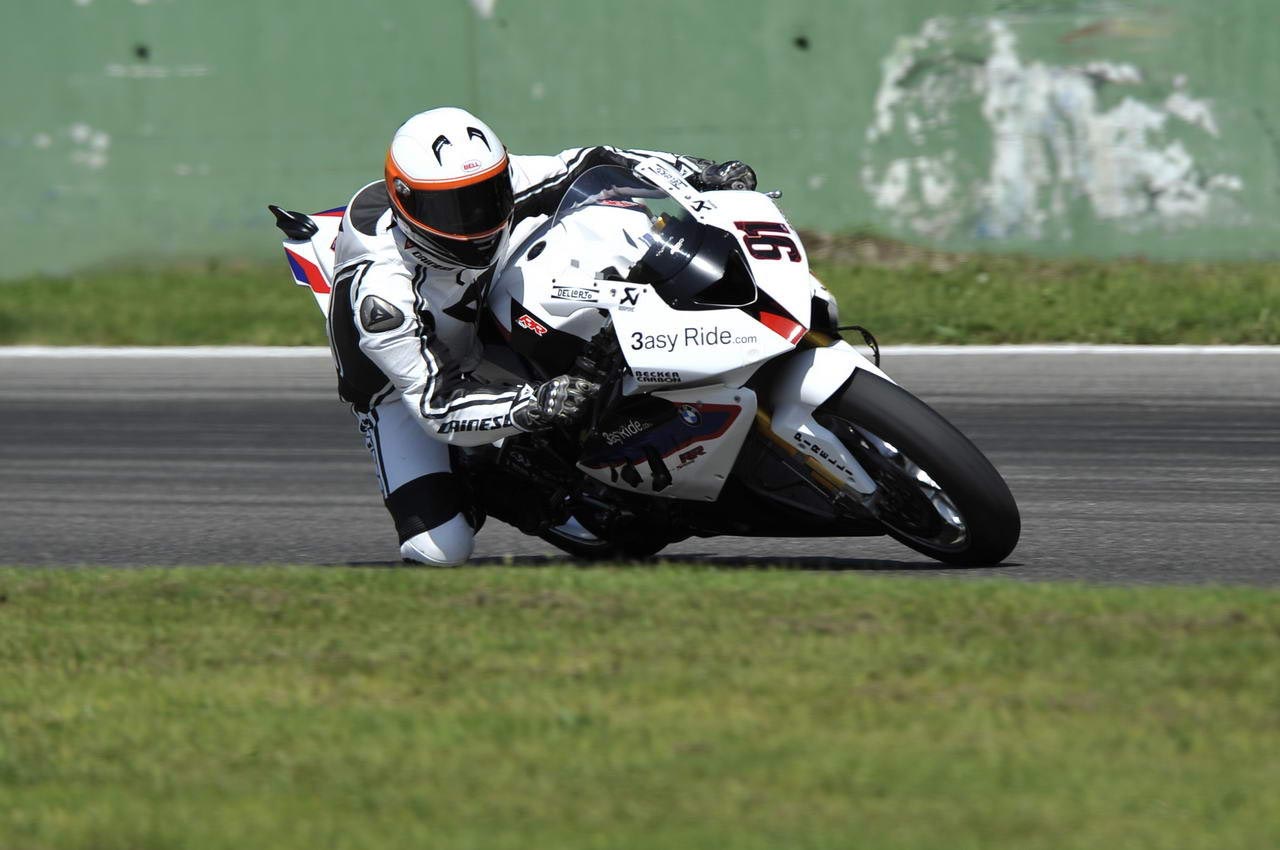
Superbike: Leon Haslam #91
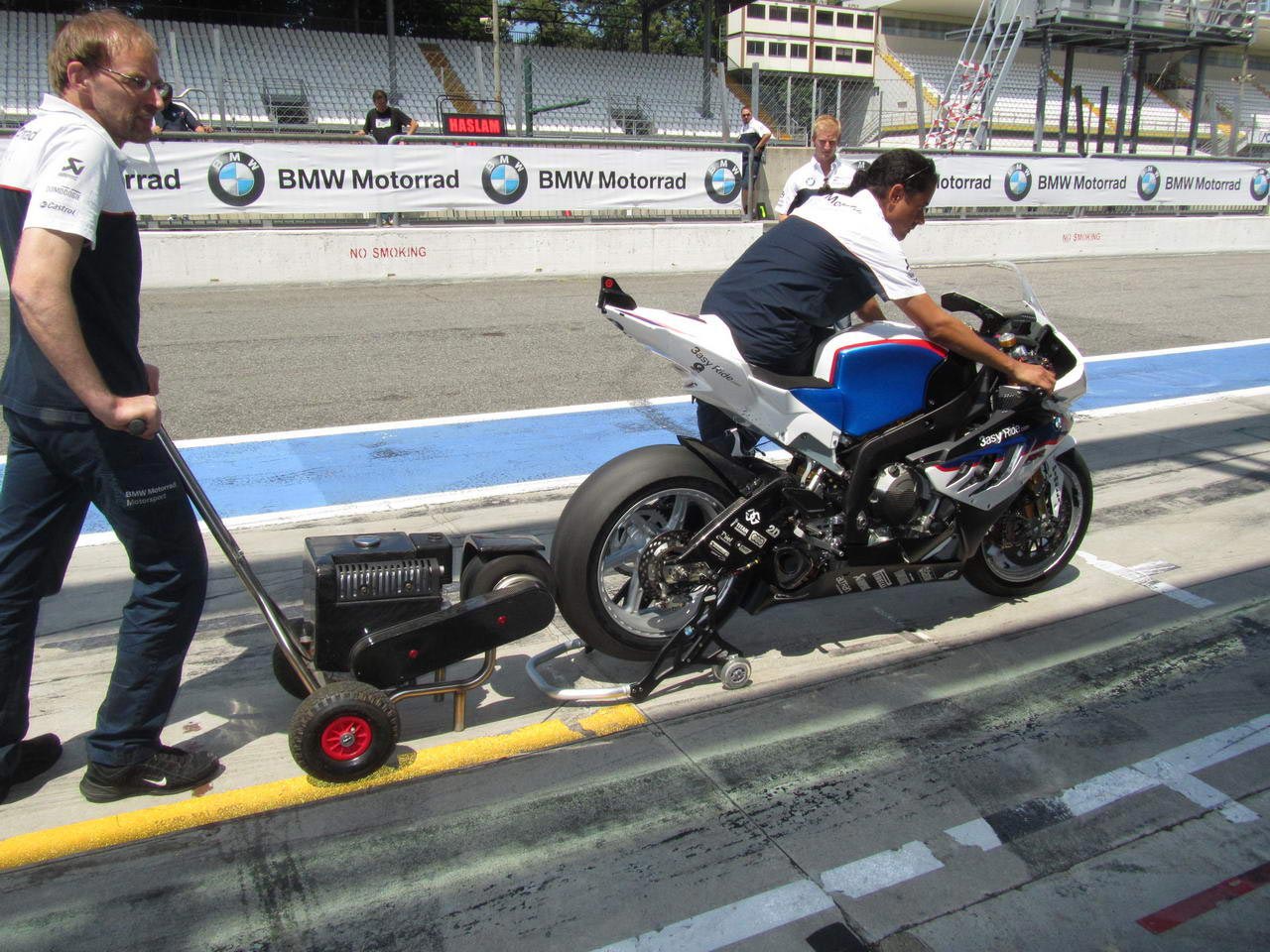
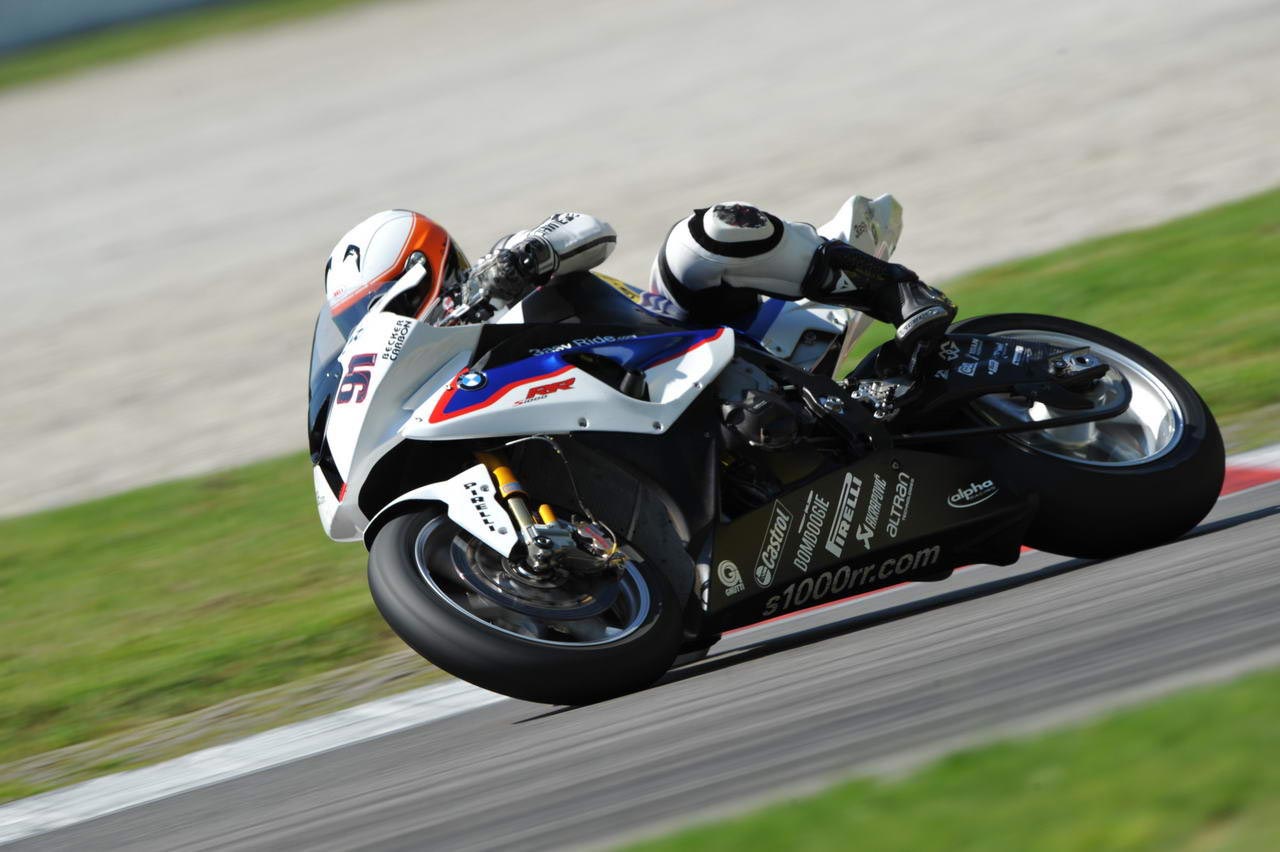
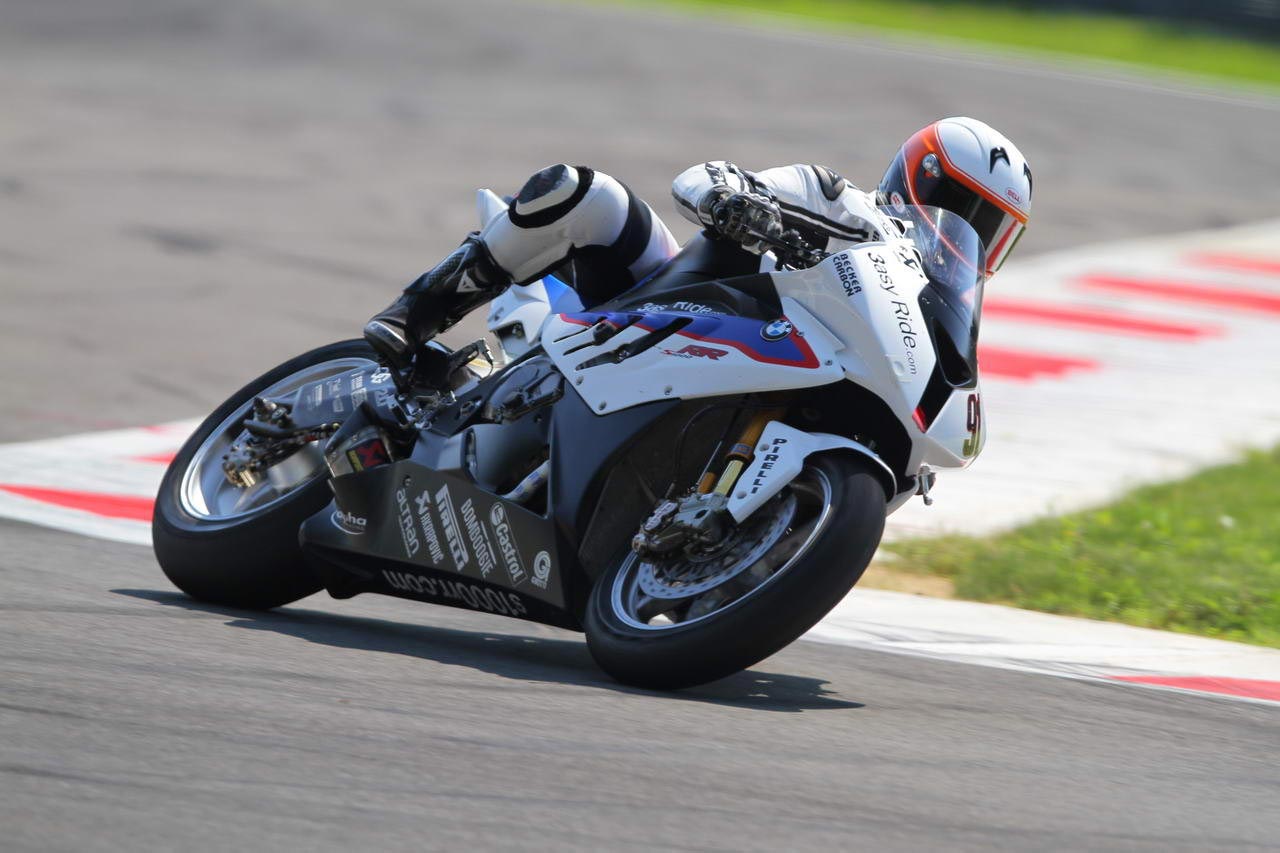
A few more steps, and I’m already seated on Leon Haslam’s bike, directly prepared by the official BMW Motorrad team. The minute I sit on the bike, I can immediately tell the difference with BMW Italia machine. Both riders have a slight physique, but Haslam’s bike has a much more compact seating position, with tighter handlebars and footpegs that are even higher than the Italian’s race bike. Of note, the seat padding is practically non-existent compared to Badovini’s bike, which allows him to lock himself into the tank much more easily, especially in braking zones. To be honest I have to say that I preferred Haslam’s neoprene seat over the alcantara one that Ayrton uses, as the latter has almost too much grip with the rider’s butt. This is because with the alcantara seat, one must lift up to move from one side to the other of the bike, while with the neoprene it is easier to slide from right to left.
Haslam’s chassis settings are much more radical compared to the ones used by Badovini. The whole bike is weighted far more on the front, allowing the S1000RR a much faster turn-in on corner entry. This also means that as it moves around more when you’re leaned over, and as a result, the traction control has to do a bit more work to keep the BMW in line in check. In fact on the factory WSBK machine, one can definitely tell the distinct moment when the TC engages, and the engagement is much rougher than on the BMW Italia racing machine. This forward-charged chassis setting makes braking quite a bit tougher, as the lighter rear end makes it easier for the bike to move around under deceleration. Again in the braking zones, I was able to see that the slipper-clutch system used by the factory team is much rougher in its activation, but offers greater engine braking at the same time.
The power delivery on this Superbike is much more violent than on the Italian version, especially when one is getting back on the gas after the tighter turns. One can also see that when you open the throttle, there is significantly more power at hand than on the BMW Italia S1000RR. As the revs rise the differences aren’t as great, but at intermediate engine speeds you can definitely feel the greater amount of torque that this engine is delivering. Objectively, you can feel the greater power from the factory machine, but I’m not sure this necessarily translates to a real advantage against the stopwatch, as the times that Badovini has been putting down this season prove this point.

Conclusion
At the end of this incredible day, I have a thousand thoughts overlapping themselves in my mind. The first among them is to be thankful for the sport of motorcycle riding as it’s still a sport where the human rider makes a difference. Also I’m grateful for being able to touch and feel with my own hands every small technical differences that three bikes, with the same DNA, still so special — and that makes me love this sport even more.
The other main thought that crossed my mind is that the technological progress attained in the last few racing seasons with these bikes’ electronic and dynamic controls has completely up-ended how we race, rendering the perfect setup an ever more elusive goal, while making these bikes incredibly more easy to ride by even an amateur rider. If I had to make a comparison with the last Superbikes that I rode, I would immediately think about the Honda CBR1000RR from the Ten Kate, team which I was able to test in 2005. At that time the Honda had no traction control, no anti-wheeling, and riding it was a true test and a true challenge since the power was basically equal to today’s bikes! In summary, because of electronics, the development of today’s race bikes is ever more important. Our thanks to BMW Motorrad Italia which has given us such the opportunity to explore this, and especially thank you to World Superbike for existing, as it really is the most beautiful racing class.
Thanks again to our friends at OmniMoto for sharing this article with us, and also thank you to A&R reader Alessandro Borroni for his translation of the original article into English.


Comments